
.svg)
Fractional vs full-time hiring: when to commit to full-time versus testing with fractional talent


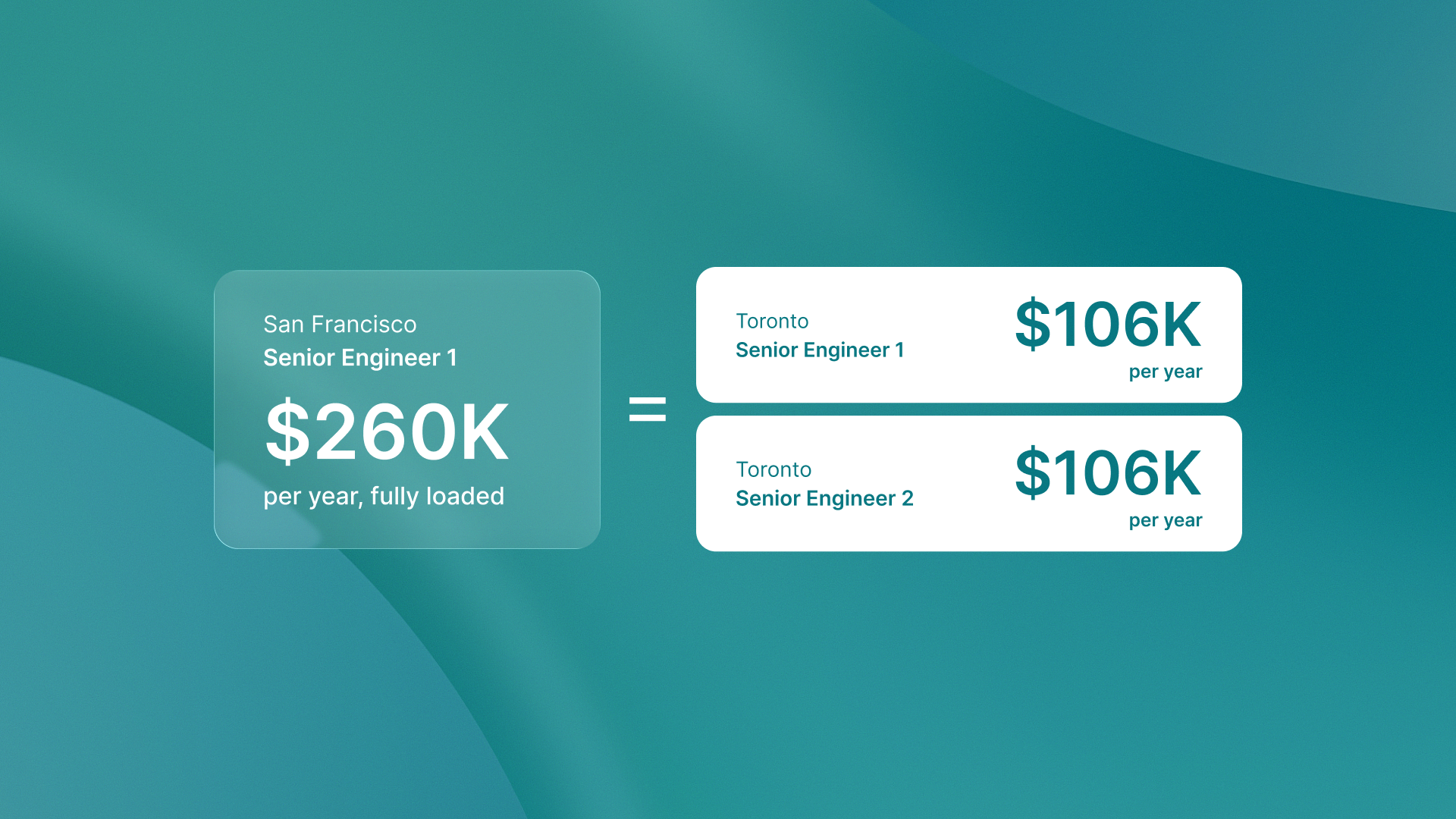
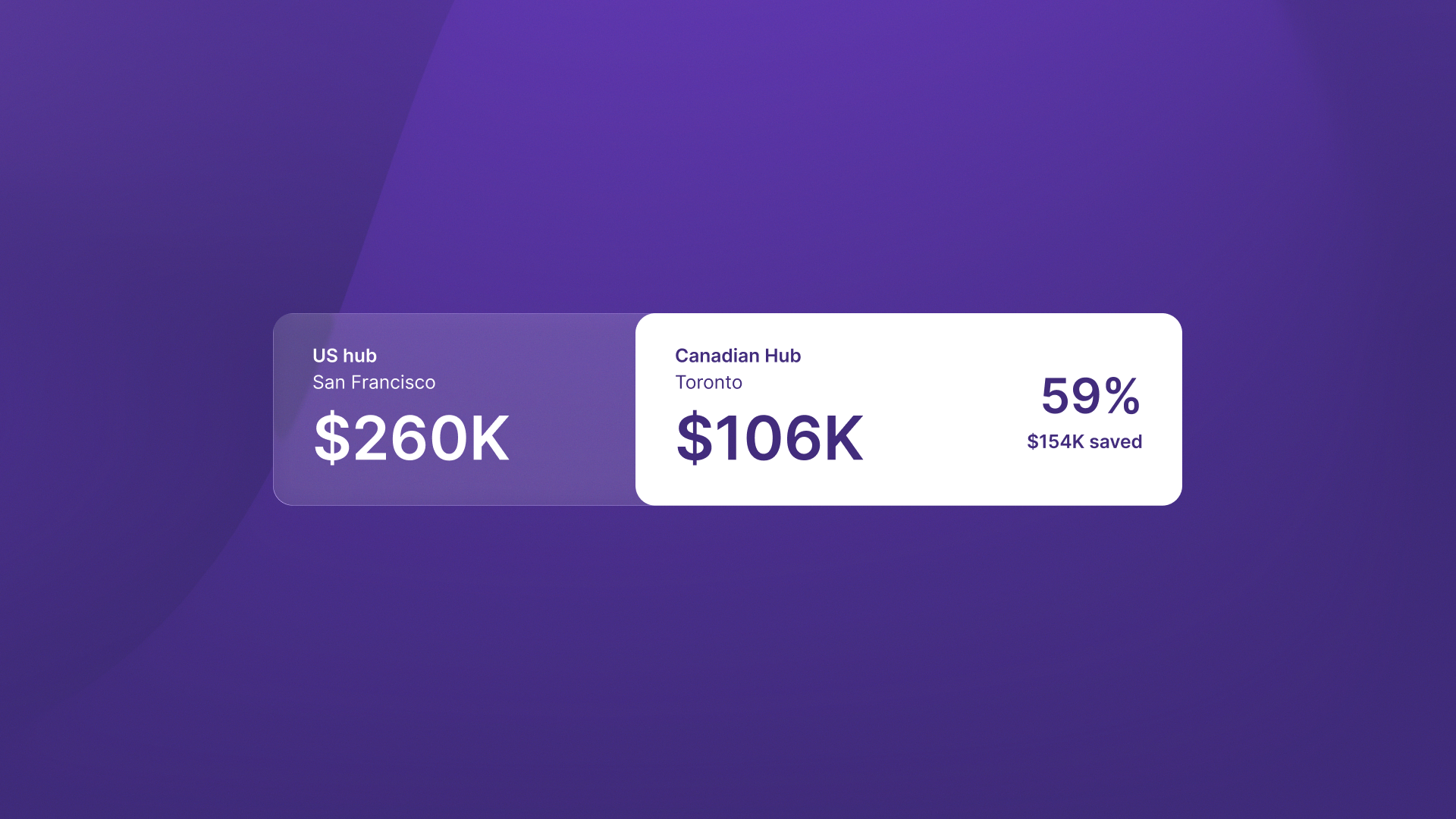
If you're paying $180K for a senior engineer in Austin, you can hire the same caliber full-time in Toronto for $110K. But should you hire them fractional at $85/hour instead?
The stakes are higher than they used to be. Entry-level positions saw a 73% hiring rate decrease in 2025, compared to just 7% across all job levels (Ravio). That means your first mid-level technical hires now happen at $120K-$180K salary bands instead of $65K-$85K entry roles. The financial risk of getting the fractional vs full-time hiring decision wrong adds up fast.
Most founders default to gut feel or whatever their network recommends. That's expensive. You need a framework. It should review each role using four factors. These are role criticality, workload predictability, knowledge retention needs, and cash flow limits. Then you need to understand how EOR services for startups dissolve the binary choice entirely.
The four-factor decision matrix
Every role you're considering falls somewhere on these four dimensions. Score each factor honestly before making a hiring decision.
Role criticality
Is this function core to your product delivery, or peripheral support? If losing this person for two weeks would halt customer deployments, that's core. If their absence creates a small problem, that's peripheral. Fractional talent for startups works for peripheral roles. Core roles demand full-time commitment.
Workload predictability
Does this role have steady, consistent work every week, or does demand spike unpredictably? DevOps engineers at early-stage companies often face spiky workloads (calm for weeks, then 60-hour fire drills). Customer success roles typically have steady, predictable volume. Spiky workloads favor fractional. Steady work justifies full-time.
Knowledge retention
Does this job require deep knowledge of the organization that takes months to learn? Or can someone do well by following documented processes? If you're building complex infrastructure where context matters more than code, you need continuity. If the work follows repeatable playbooks, fractional specialists can execute without tribal knowledge.
Cash flow constraints
Do you have 18+ months of runway to absorb fixed costs, or are you managing burn carefully quarter by quarter? 61% of technology leaders plan to increase permanent headcount in 2026 (Robert Half), but confidence doesn't eliminate cash flow reality. If a bad quarter means layoffs, fractional reduces risk. If you can weather volatility, full-time builds continuity.
Why the talent shortage changes the equation for when to hire full-time employees
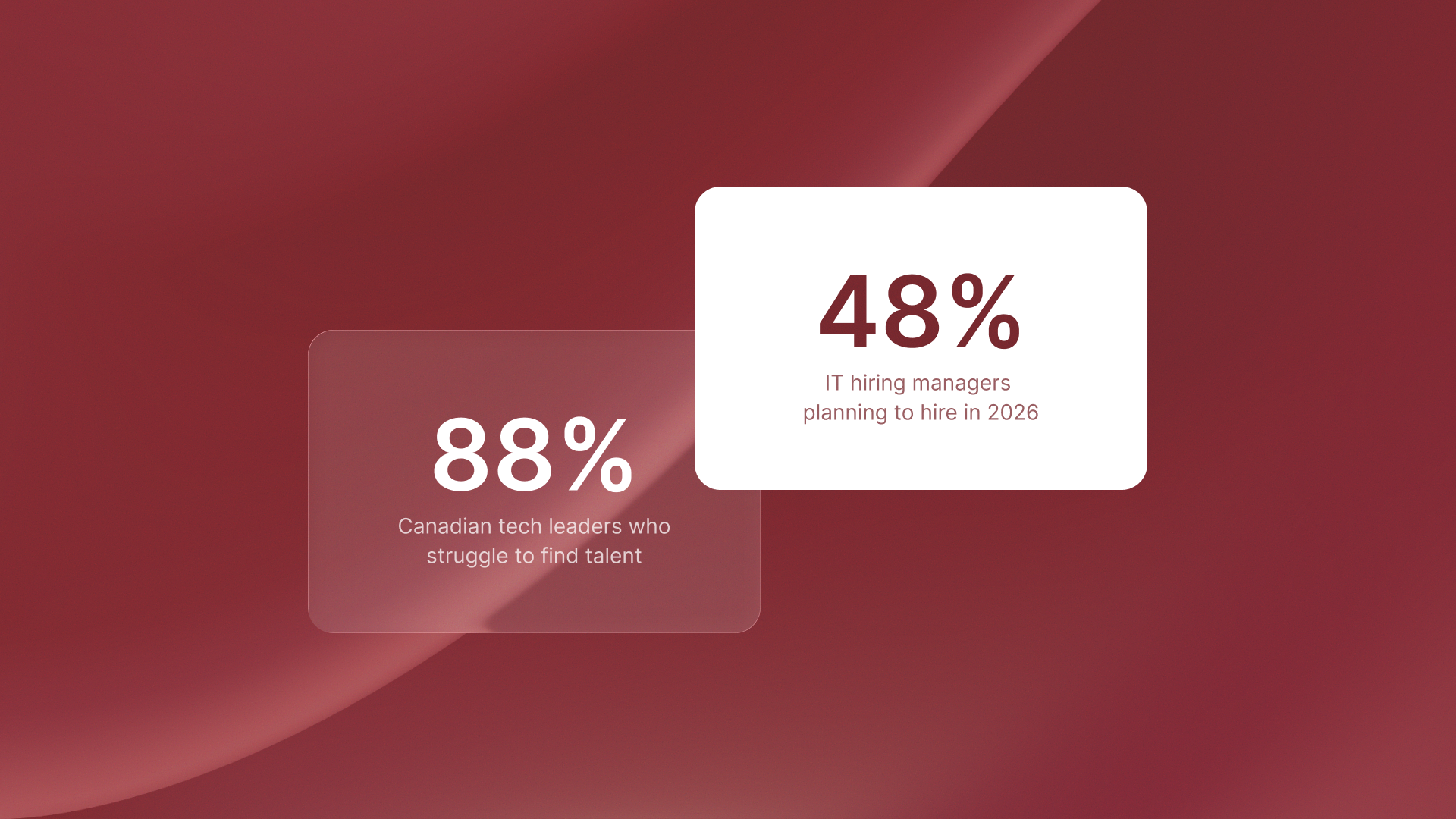
Here's the key data point: 72% of employers worldwide cannot find the technical talent they need (Kore1 IT Staffing Trends). When talent is scarce, the fractional vs full-time hiring question shifts. It's no longer "can we afford full-time." It becomes "can we afford to lose access to scarce talent by only offering fractional arrangements."
A senior ML engineer who wants a full-time $140K role likely won’t take a fractional contract at $100 an hour. It offers no benefits and no stability. You're not just optimizing costs. You're competing for talent that has multiple full-time offers.
I've seen companies get this wrong both ways:
- They commit full-time to roles that needed 15 hours per week of actual work, burning cash on underutilized headcount
- They offer fractional to critical roles and watch their top candidate accept a full-time offer elsewhere
The pattern I’ve seen: fractional marketing is replacing full-time hiring for specialized, project-based work. But engineering roles that touch your core product still need full-time commitment.
The hidden cost of fractional that changes the math
Most founders see $85/hour fractional versus $180K full-time and assume fractional always wins on cost. That math misses the overhead.
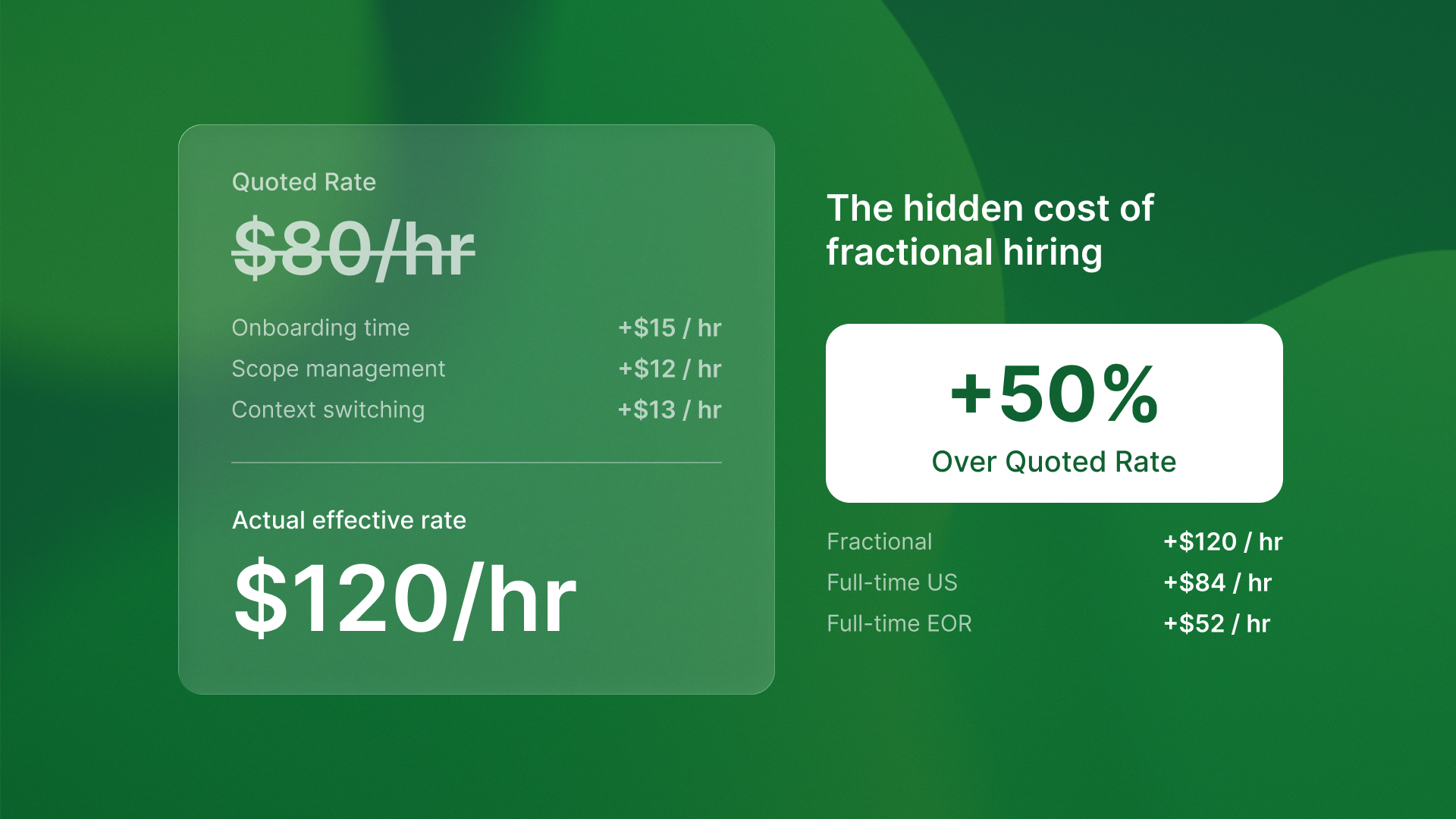
Agencies systematically underestimate freelancer costs by 30-50% because traditional multipliers miss coordination overhead, onboarding inefficiency, and scope management expenses. Your $85/hour fractional engineer isn't working 40 billable hours per week. They work 25 to 30 hours. This includes time spent coordinating with clients. It also includes time spent switching between projects. It includes ramp-up time for each task.
Then there's the bottleneck cost. The 3-6 month hiring lag for QA engineers creates a $600K annual hidden cost It happens due to lost developer time, context switching, and production incidents. Fractional arrangements don't eliminate that lag. They defer it. Every time your fractional hire rotates off your project or reduces hours, you're rebuilding context.
The real comparison:
- Fractional engineer at $85/hour: $85 × 30 billable hours × 52 weeks = $132,600 per year. This covers 30 hours per week of actual output. It also adds 8 to 12 hours per month for your team’s coordination time
- Full-time Canadian engineer at $110K: $110,000 salary + $299 per month EOR fee = $113,588 per year. This covers 40 hours per week of focused work. It also has zero coordination overhead
When you account for actual utilization and coordination tax, full-time Canadian tech talent hiring through EOR often costs less than fractional U.S. talent at equivalent skill levels.
How EOR services eliminate the binary choice
Employer of Record services change the math entirely. Instead of choosing between fractional flexibility and full-time commitment, you get both.
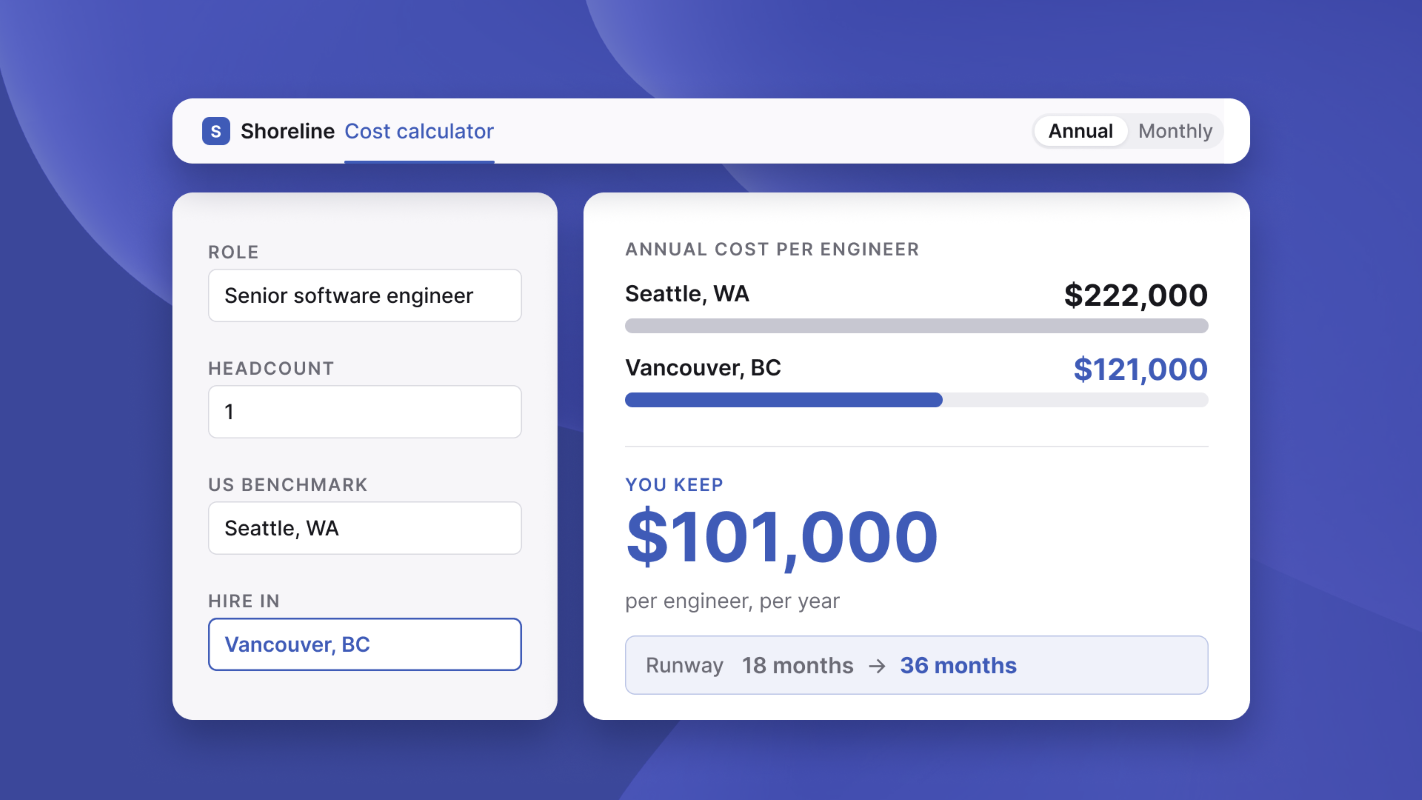
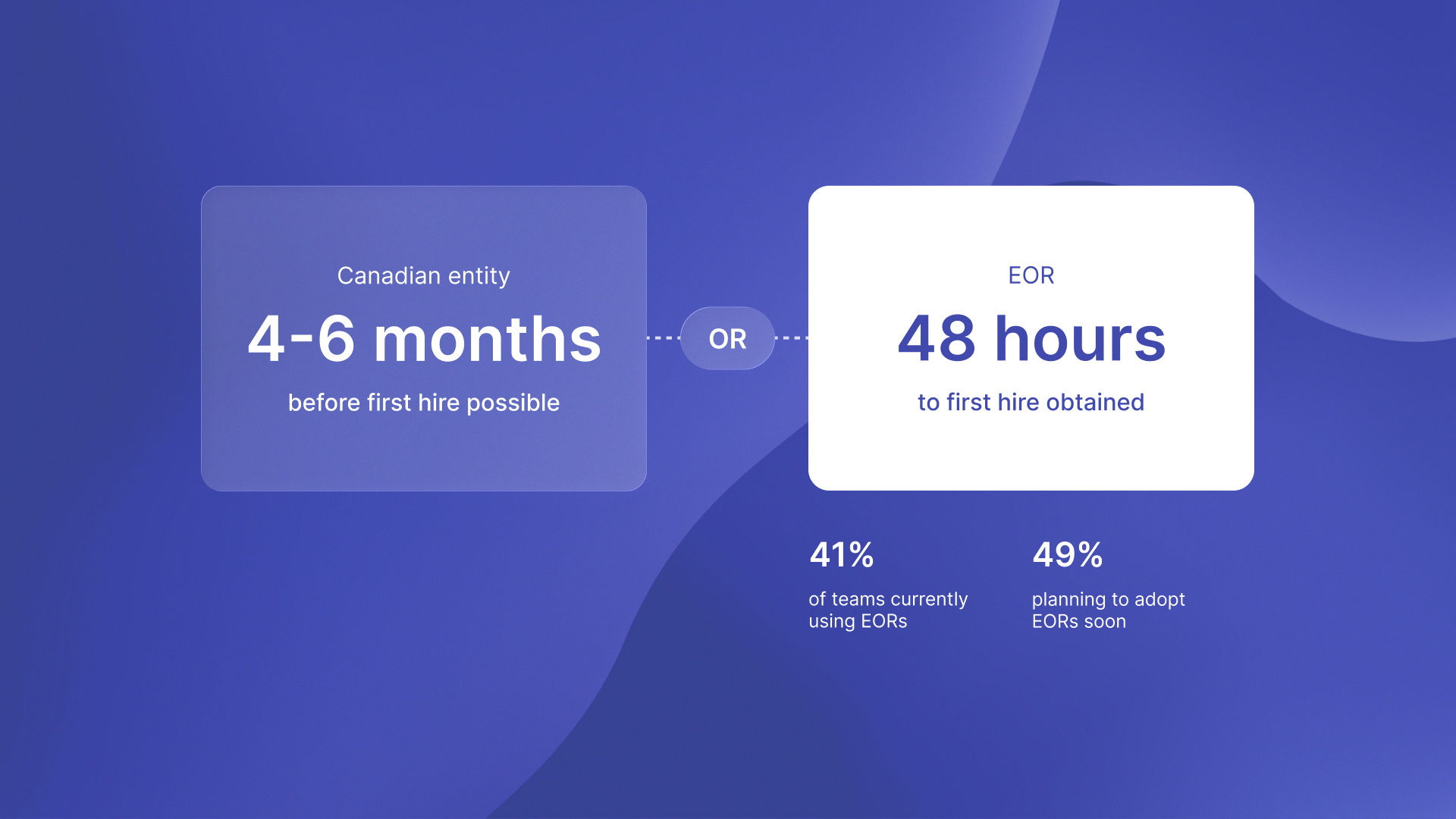
Shoreline enables full-time Canadian tech hiring in 48 hours without entity setup. You pay $299/month flat rate. You avoid the $15K-$25K entity formation cost. You access 7% annual cashback on eligible tech hires. More importantly, you hire full-time talent at 40% lower rates than U.S. equivalents. You maintain the flexibility to scale without long-term infrastructure commitments.
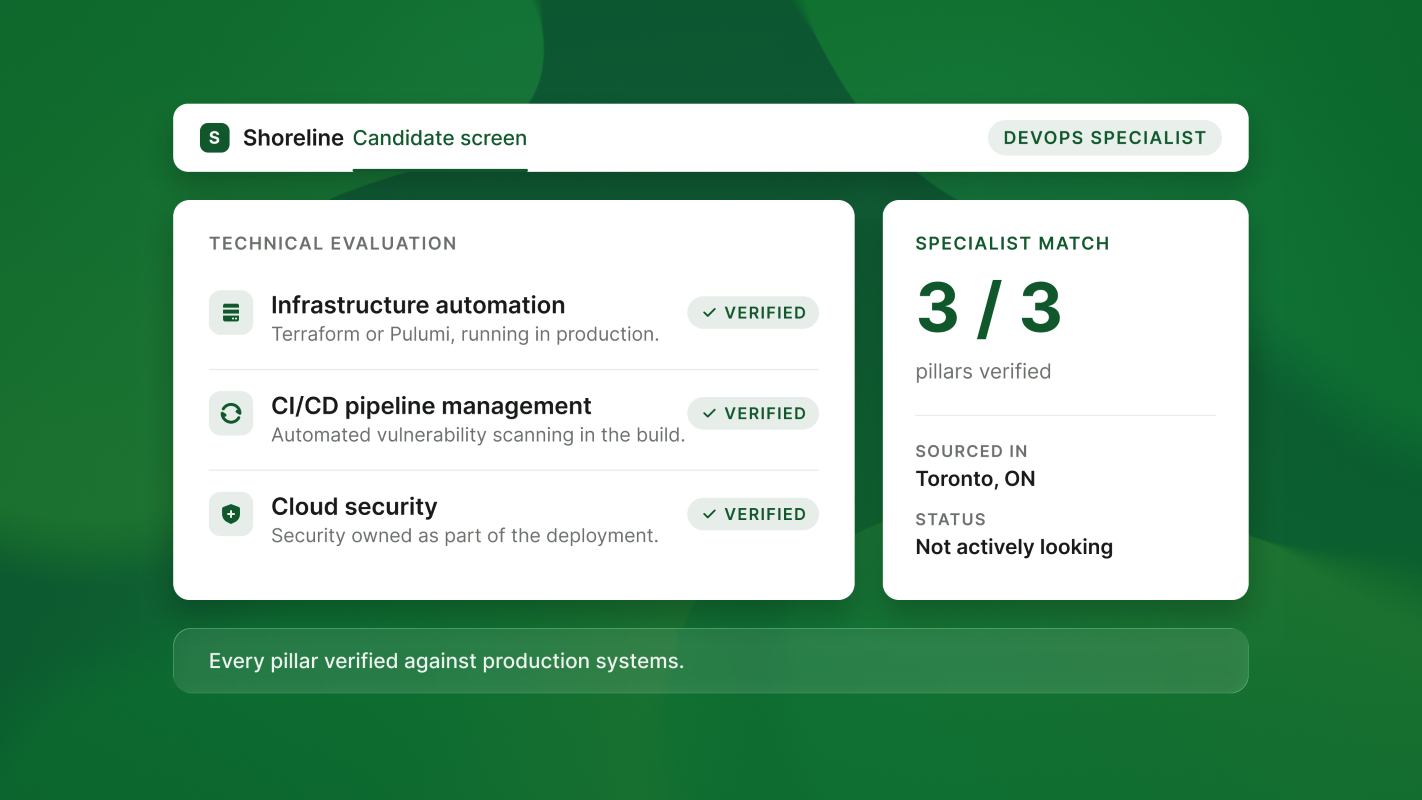
The hiring decision framework still applies. If your role rates high in criticality and knowledge retention, EOR lets you hire full-time. You can do this without the entity overhead that once made full-time too costly early on. If cash flow is tight, the 40% cost reduction on Canadian hires changes your runway math immediately.
For context, Islands coordinates U.S. and Canadian engineering teams across 12 client projects using EOR structures. The model works because you get full-time commitment without full-time U.S. costs or entity complexity.
Why content marketing changes the fractional vs full-time calculus
Here's a pattern most tech companies miss: marketing roles often benefit from fractional arrangements more than engineering roles do.
Thought leadership delivers 156% ROI versus 9% for traditional B2B marketing. Most companies miss this edge. They use demand-gen metrics to measure content. Instead, they should track its impact on deal size, sales speed, and win rates. Fractional content strategists who specialize in thought leadership can execute this work without needing deep product knowledge. They bring proven frameworks and external credibility.
The difference: engineering work requires institutional context that takes 3-6 months to build. Content work requires market insight and writing skill that transfers across clients. A fractional CMO who's built thought leadership programs for 8 SaaS companies brings more value than a full-time hire learning on the job.
What to do next
Map your next 3 hires against the four-factor matrix. Score each factor low, medium, or high. Roles that score high on criticality and knowledge retention demand full-time. Roles with spiky workloads and low knowledge retention needs work fractional.
For roles that scored high on criticality and knowledge retention, run the Canadian full-time numbers through an EOR. If a 40% cost cut and 7% cashback extend your runway by six or more months, your hiring timeline changes fast.
Test one full-time Canadian hire through EOR before committing to entity setup. If the model works, you've de-risked international expansion without the $15K-$25K entity formation cost. If it doesn't, you exit cleanly.
The choice isn't fractional or full-time anymore. It's fractional, full-time with entity overhead, or full-time through EOR without the setup risk. Most startups default to the first two options because they don't know the third exists. Ready to test full-time hiring without the traditional overhead? Book a free consultation with Shoreline to see how EOR services can extend your runway while building the team you need.
.png)


.png)



%2520(8).png)