
.svg)
Senior software engineer salary canada vs US: the 40-50% cost advantage and the hidden expenses most finance teams miss

.png)
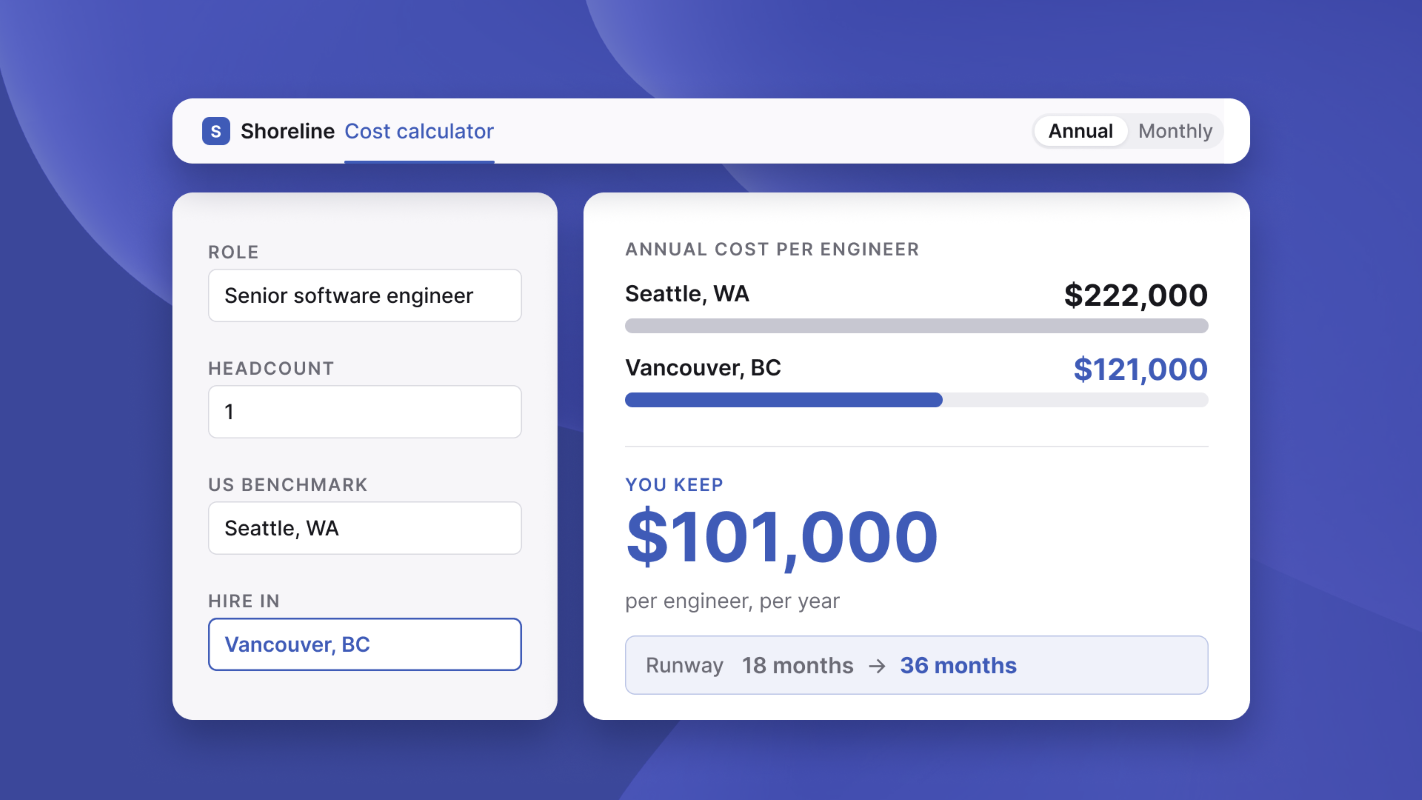
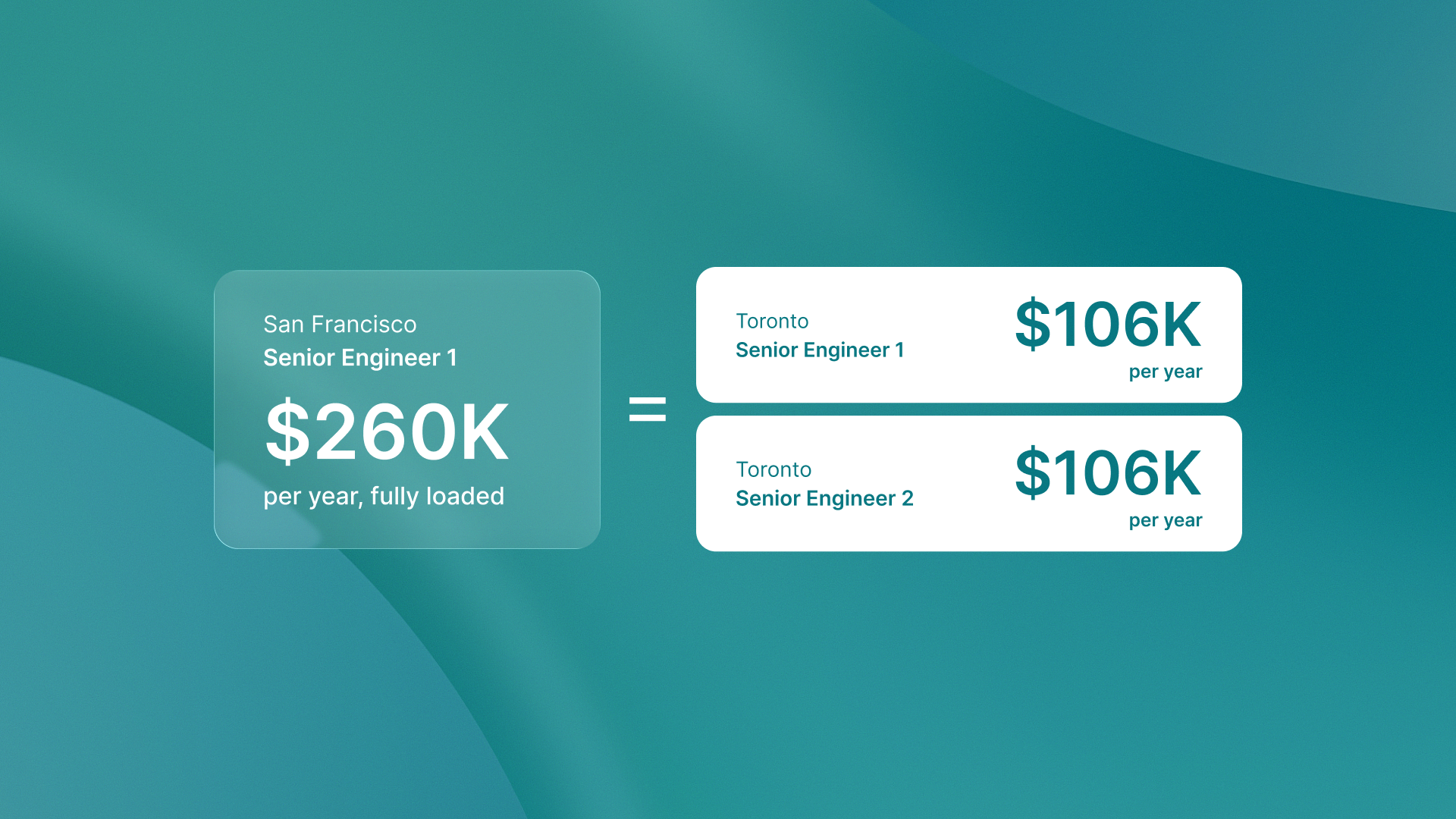
If you're paying $160,000 for a senior engineer in the U.S., you can hire two similar engineers in Toronto. You can keep the same budget. You can also get 7% to 10% back through tax credits.
Most founders stop at base salary comparisons when evaluating Canadian hiring. That's a mistake. The real cost to hire a software engineer in 2026 includes time to fill roles (40 to 50 days). It also includes recruiting fees ($10k to $20k per hire). It includes the opportunity cost of leaving senior roles unfilled. That cost can be 1 to 3 times annual salary in delayed output per quarter. When you layer all of these together, the Canadian advantage compounds from 25-35% to 40-50%.
Here's how the math actually works.
Base salary comparison: senior software engineer salary Canada vs US
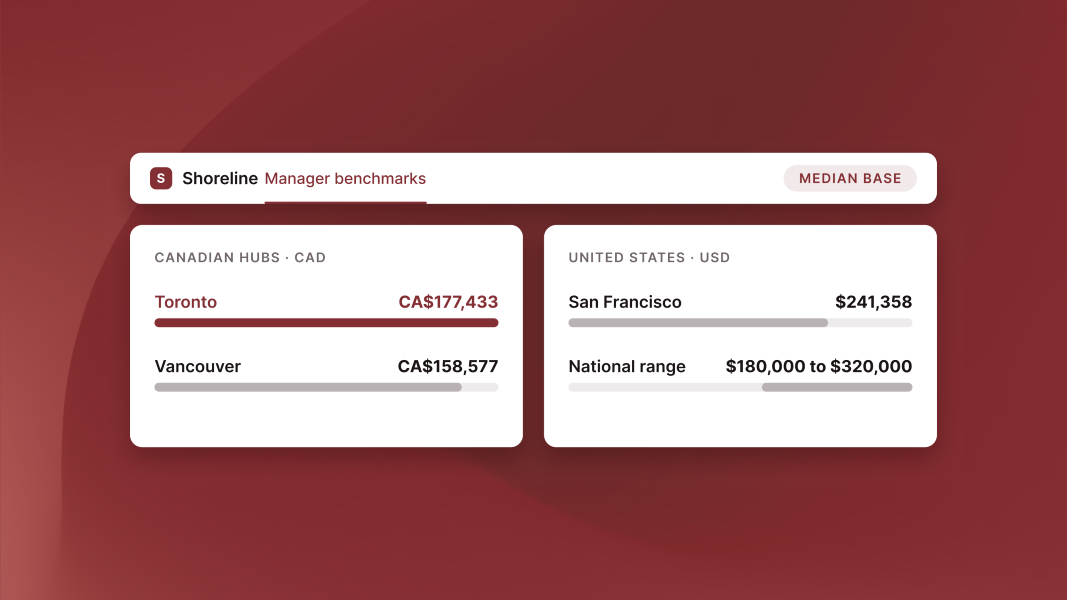
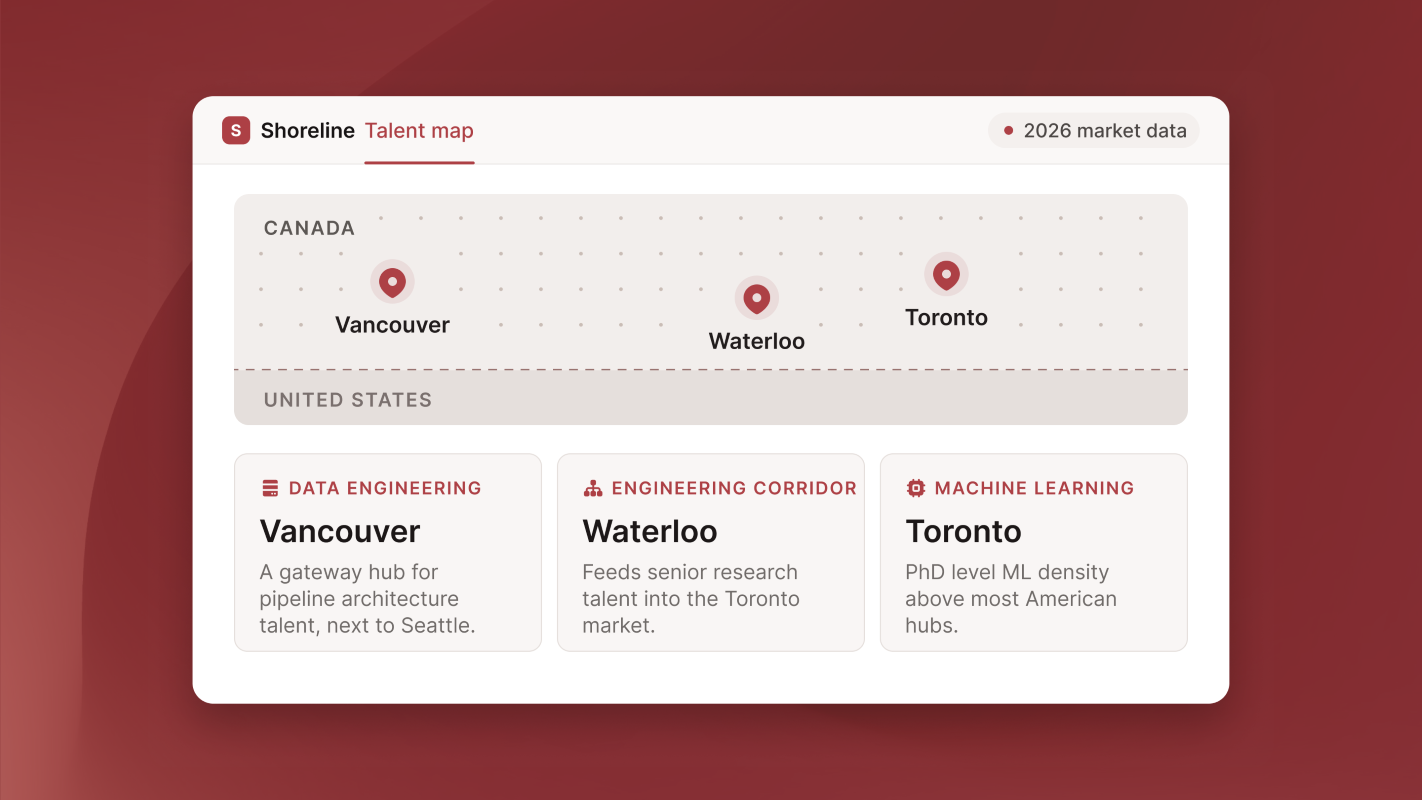
The average software engineer salary Toronto Vancouver corridor runs approximately $88,561 to $105,109 per year in 2025-2026. For senior roles in Toronto and Vancouver, expect $105-130k CAD base salary. That's $75-93k USD at current exchange rates.
U.S. senior engineer salaries in major tech hubs sit at $140-180k USD for comparable roles. The currency-adjusted delta is immediately visible: 25-35% lower base compensation for equivalent quality and timezone alignment.
But base salary is only the starting point. The real cost picture emerges when you add the layers most financial models ignore.
I've seen companies get this calculation wrong repeatedly. They budget for the salary line item and miss the surrounding costs that actually determine total hiring expense. The gap between Canadian tech salaries and US rates looks attractive on paper. But total cost savings matter most when you defend hiring choices to your board.
Time to fill engineering roles: the 40-50 day delay tax
For software engineering roles, typical time-to-fill is 40 to 50 days. Senior roles often take about 20% longer. That's nearly two months of productivity lost while the role sits open.
An open senior engineering role can cost a growing company 1 to 3 times the annual salary. This loss can happen in just one quarter. It comes from reduced output. If your roadmap depends on shipping a feature that earns $500k a year, a late start costs money. If the engineer starts 50 days late, you lose about $68k in revenue. This happens before they write any code.
The time-to-fill engineering roles metric compounds when you're trying to scale quickly. QA flow discovered this pattern when a 3- to 6-month hiring lag for QA engineers caused a $600K annual hidden cost. This came from lost developer productivity and context-switching overhead. The same dynamic applies to senior engineering seats that sit unfilled for 50+ days.
Cost to hire software engineer 2026: the $10-20k recruiting tax per seat
Technical roles routinely cost $10,000 to $20,000 per hire This includes recruiter fees, tools, interview time, and onboarding. Standard recruiting fees run 20-25% of first-year salary. At $160k USD, that's $32-40k just to fill the role.
Integrated EOR services reduce this to 15%. They handle compliance, payroll, and benefits administration without the overhead of traditional recruiting agencies. For a $105k CAD Canadian hire ($75k USD), that's $11,250 in recruiting costs instead of $32-40k.
The fee differential alone saves $20-28k per hire. Multiply that across three senior hires in a year, and you've recovered $60-84k in recruiting expenses.
This is the same pattern we see across other specialized roles. Full-time marketing hires cost $802,500 in year one when you account for recruitment, benefits, and overhead. The cost to hire a software engineer in 2026 follows similar patterns, with recruiting fees making up 20% to 25% of first-year costs.
Tax credit optimization: the 7-10% cashback layer
Canadian R&D tax credits through SR&ED (Scientific Research and Experimental Development) and provincial programs can return 7-10%. This cashback applies to eligible salary costs. On a $105k CAD salary, that's $7,350-10,500 annually.
U.S. R&D credits exist but rarely apply to salary costs as directly or generously. The Canadian structure treats engineering salaries as eligible R&D expenditures by default. This creates a systematic cost recovery mechanism most U.S. founders don't factor into their hiring models.
This isn't a one-time benefit. It compounds annually as long as the role exists.
Total cost advantage: 40-50% when you layer everything
Here's the full cost breakdown for one senior engineering hire:
U.S. hire ($160k USD):
- Base salary: $160,000
- Recruiting fees (20%): $32,000
- Time-to-fill opportunity cost (50 days): $22,000 (conservative estimate)
- Tax credits: $0
- Total first-year cost: $214,000
Canadian hire ($105k CAD / $75k USD via Shoreline):
- Base salary: $75,000 USD
- Recruiting fees (15%): $11,250
- Time-to-fill opportunity cost (50 days): $10,274 (proportional)
- Tax credits (8% average): -$6,000
- Total first-year cost: $90,524
Cost difference: $123,476 (58% savings)
That's not a rounding error. That's an entire second hire, or six months of runway extension, or margin you can bank instead of burning.
The arbitrage compounds when you scale. Three senior hires in Canada instead of the U.S. saves $370k in year one alone. Freelancers actually cost 30-50% more than budgeted when you include coordination overhead. The same applies to full-time hiring when you ignore hidden costs.
.png)
Why the window won't stay open forever
As more U.S. companies discover the benefits of employing Canadian talent through an EOR, competition for top engineers in Toronto and Vancouver will tighten. The companies gaining an edge now build 40–50% cost savings into their hiring budgets. Their competitors still pay full U.S. rates.
I've been watching this arbitrage opportunity narrow over the past 18 months. Toronto salaries rose 15-20% as remote work normalized and U.S. companies hired beyond traditional tech hubs. Vancouver and Montreal are seeing similar trends. The currency exchange provides some buffer, but the structural advantage compresses as market awareness spreads.
The pattern is predictable. Early movers secure better unit economics. Late adopters pay market rates after saturation.
What to do next
If you're evaluating Canadian hiring, run this three-step audit:
Map your current U.S. engineering costs including hidden expenses
Add base salary + recruiting fees (20-25%) + estimated opportunity cost of time-to-fill (1-3x quarterly output per unfilled seat). Most teams underestimate total cost by 30-40%.
Run the numbers on Canadian equivalents using the benchmarks above
Use $105–130k CAD for senior roles in Toronto and Vancouver. Assume 15% recruiting fees with integrated EOR providers. Plan for 7–10% tax credit recovery. The delta is larger than most finance teams expect.
Factor tax credit optimization into your total cost model
SR&ED and provincial R&D credits return 7-10% of eligible salary costs annually. This isn't a one-time incentive. It's a structural cost advantage that compounds over the employee lifecycle.
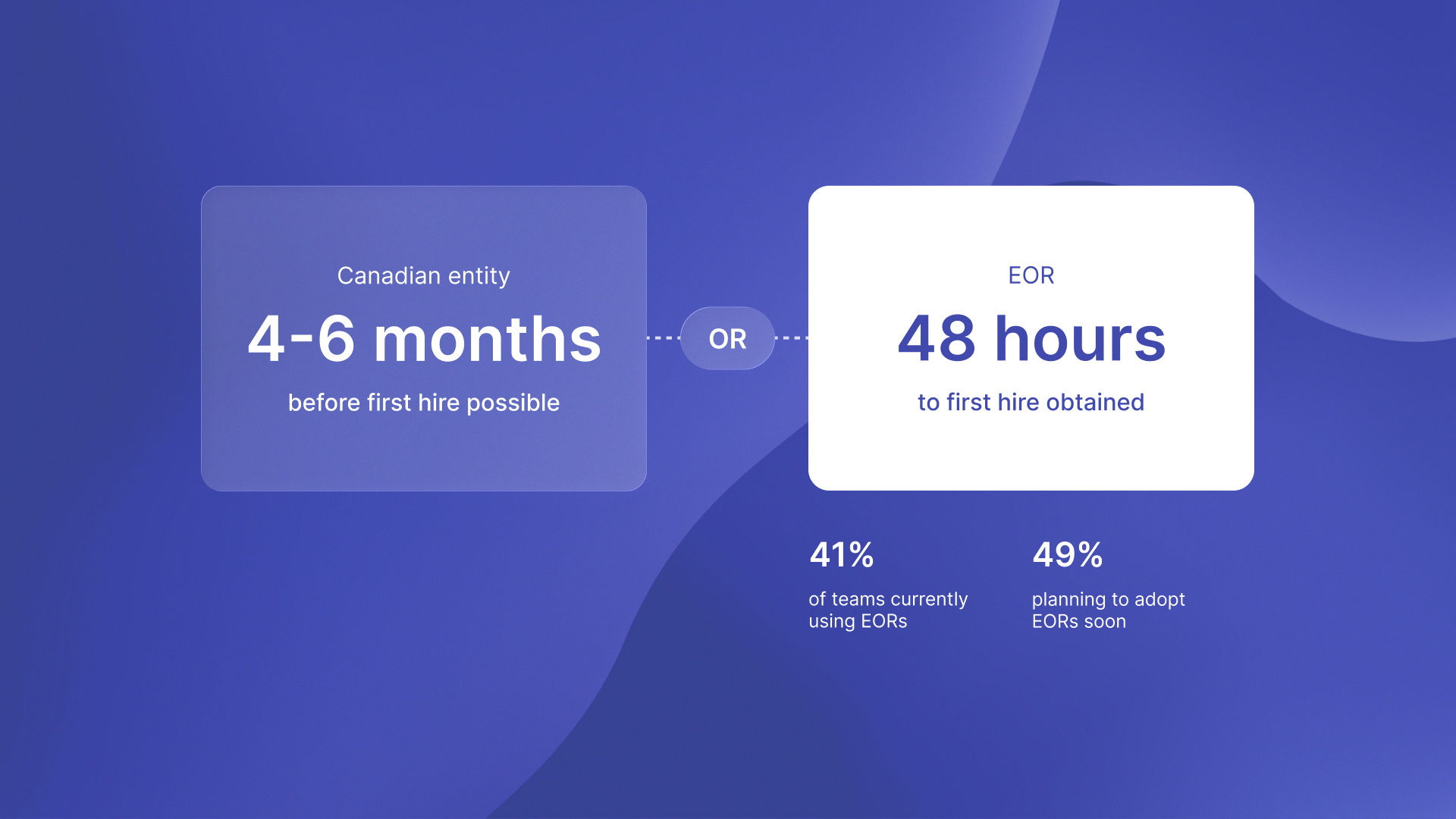
The Canadian salary arbitrage window won't stay open forever. Run your numbers now and see how much you could save on your next engineering hire. Ready to explore Canadian hiring without the compliance headaches? Book a free consultation with Shoreline to model your specific savings.
.png)






%2520(8).png)