
.svg)
How U.S. startups hire canadian developers without setting up an entity

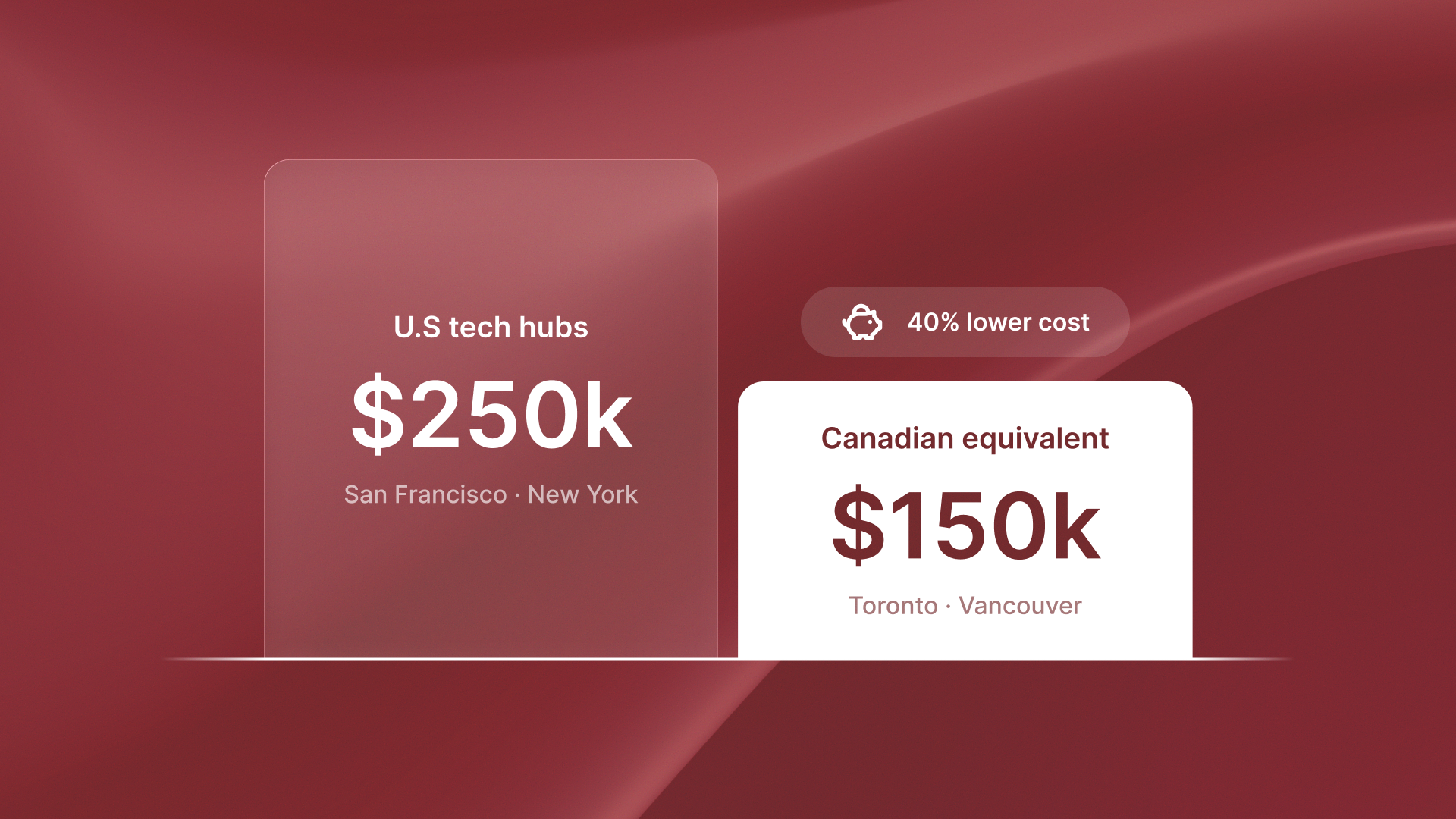
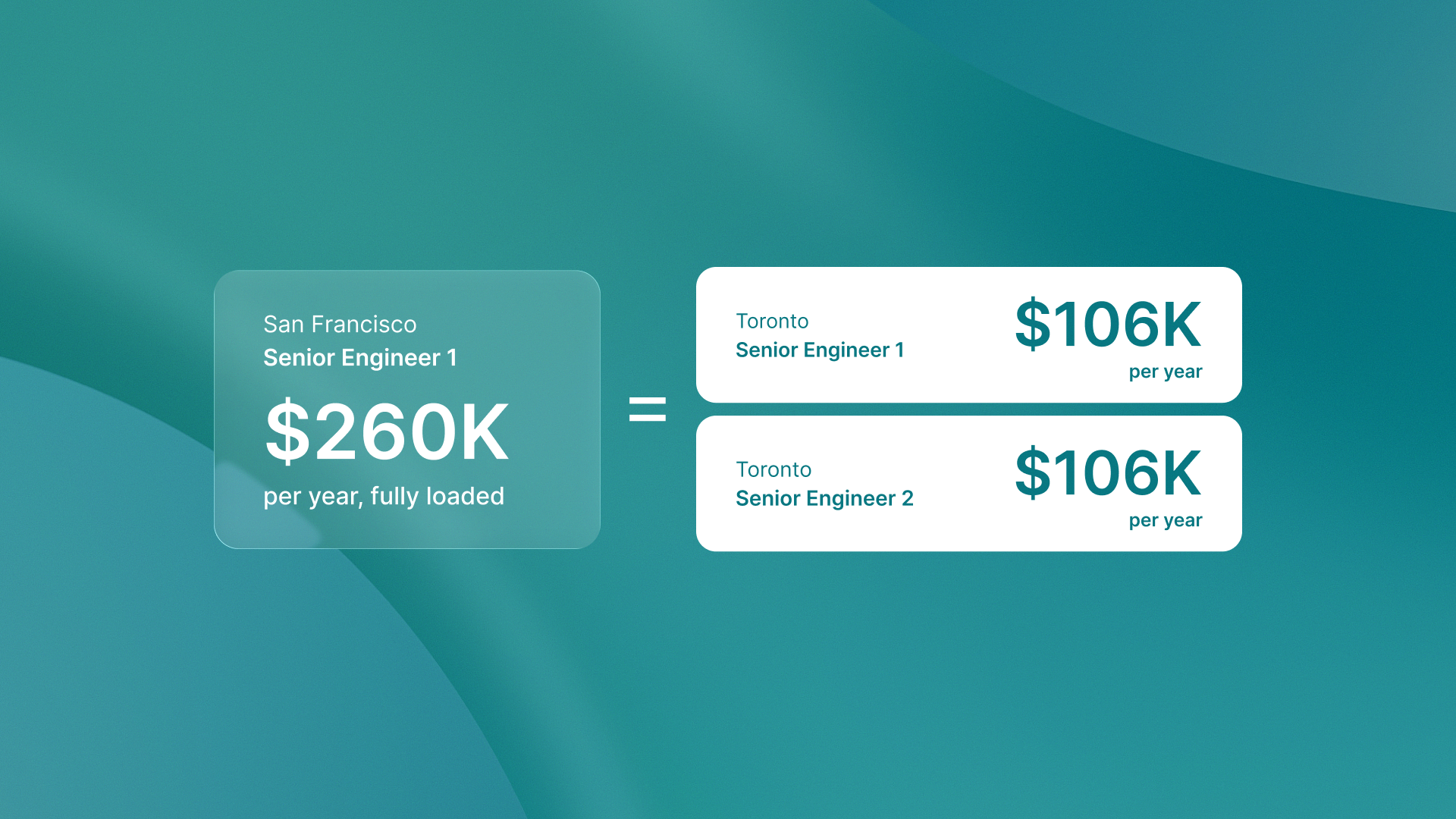
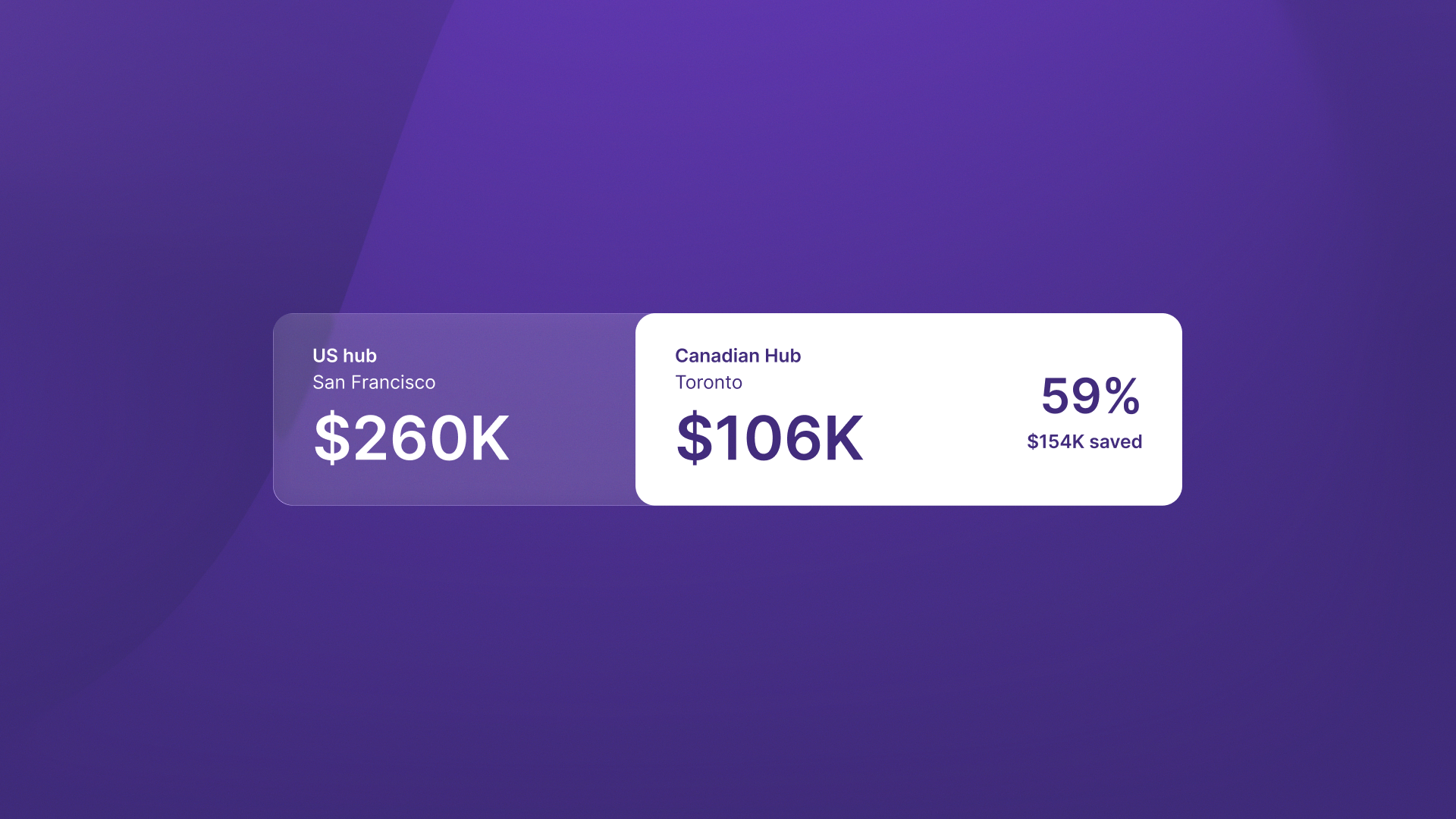
U.S. startups spend $250K per senior engineer in San Francisco. Similar talent is three hours away in Toronto. It costs about 40% less. The gap isn't skill or timezone—it's infrastructure. Most founders don't know how to access Canadian talent without the 3-6 month entity setup that kills hiring momentum.
Why Canadian tech talent is available right now
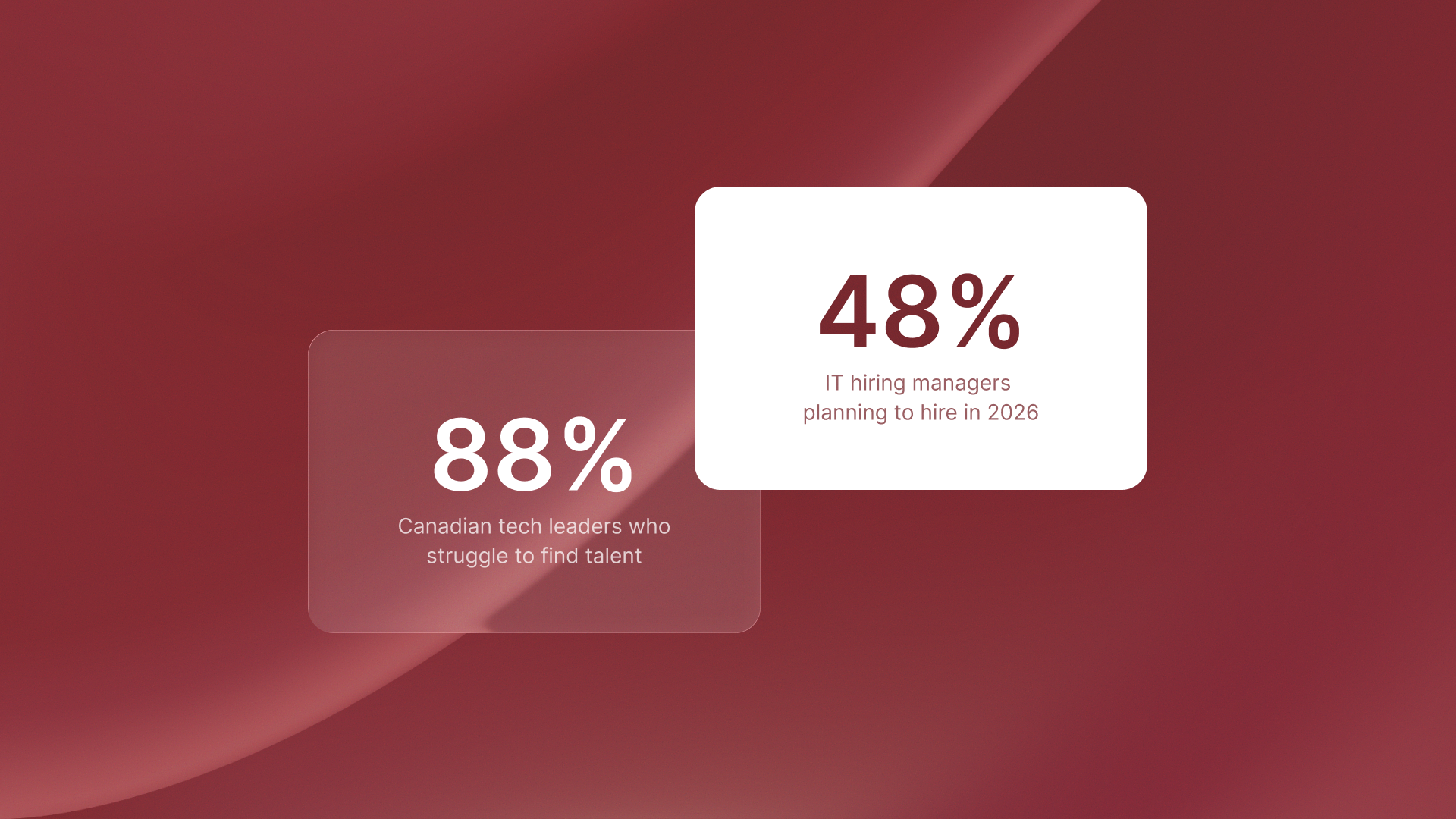
The Canadian market shows a paradox. 88% of Canadian tech leaders struggle to find talent. Canada will need 250,000 more tech workers by the end of 2025. Yet 48% of technology and IT hiring managers in Canada plan to increase hiring in 2026. Only 5% have the headcount to meet their goals.
Canadian companies can't absorb available talent fast enough, leaving experienced engineers actively looking for work. The market isn't oversaturated with bad candidates. It's underutilized because domestic demand can't match supply. U.S. startups facing talent shortages in hot markets can hire engineers. They may have studied at the University of Toronto or UBC. They may have worked at Shopify or Wealthsimple. They also work in similar time zones.
The cost advantage is structural, not temporary
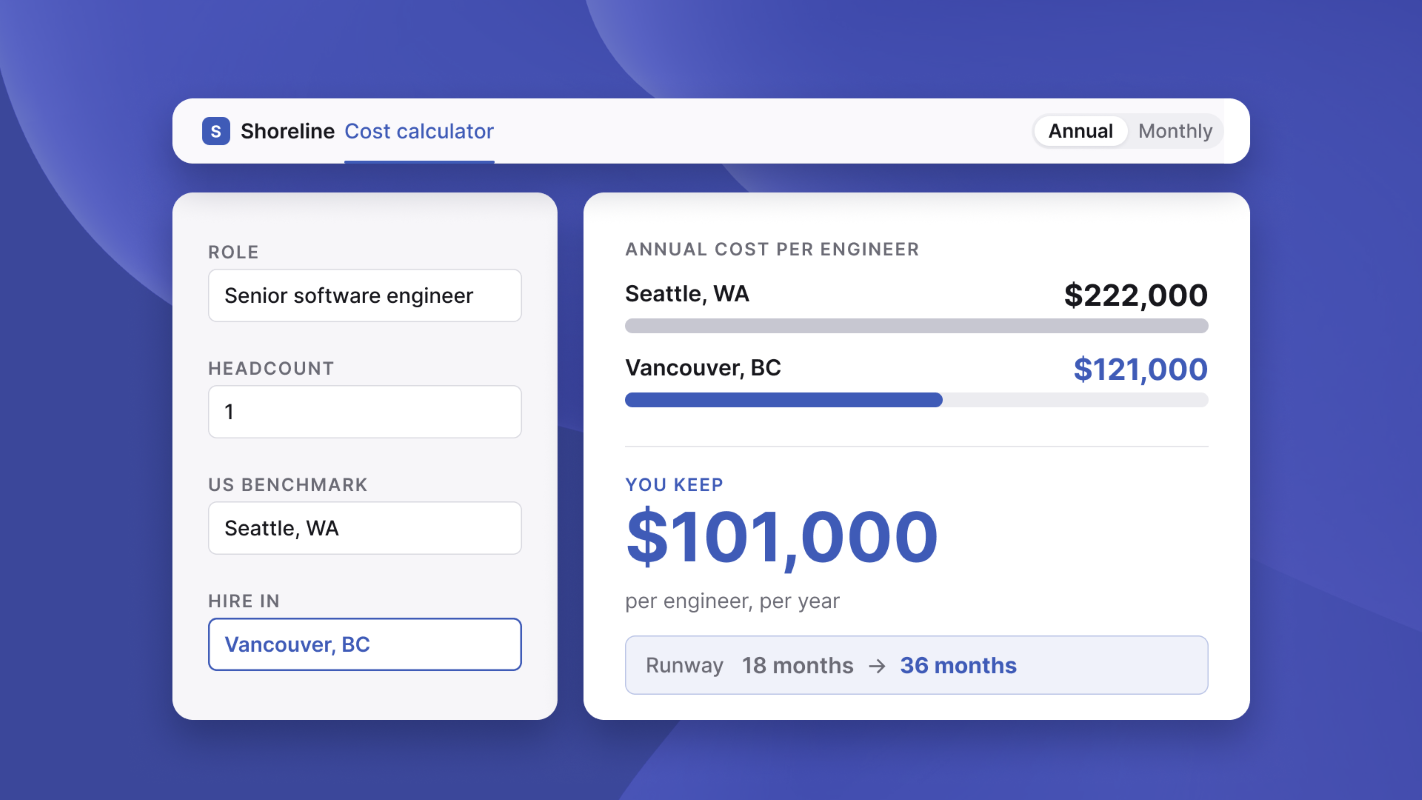
Senior software engineers in major U.S. tech hubs earn $180K-$250K. Canadian equivalents cost 40% less, driven by currency exchange rates and regional market dynamics. The difference reflects market arbitrage, not a skills gap.
Toronto runs on EST. Vancouver mirrors PST. Cultural workplace norms align with U.S. tech expectations: async communication, sprint-based development, minimal hierarchy.
Why most startups can't access this market
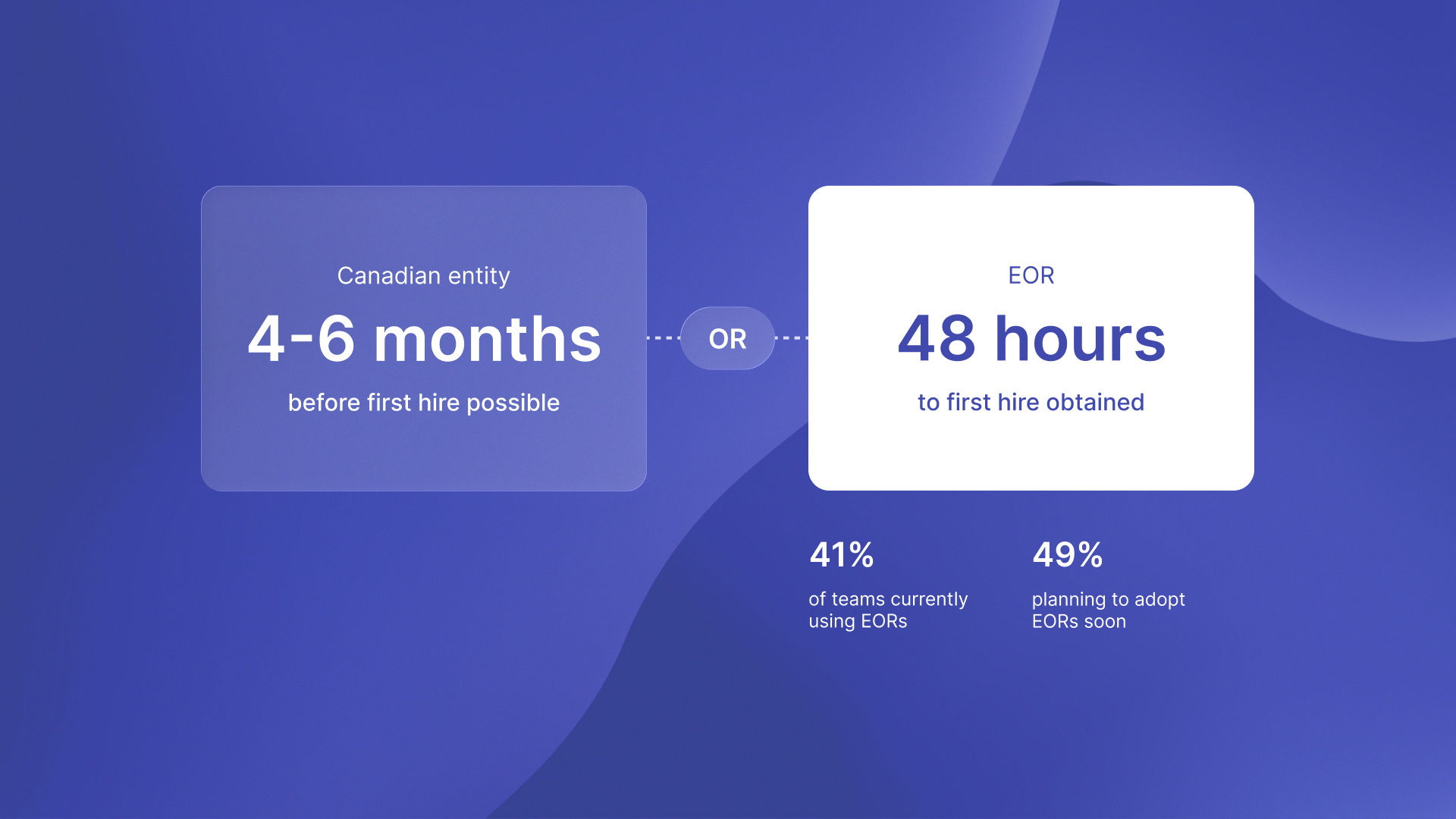
Establishing a Canadian subsidiary costs $15K-$50K upfront and takes 3-6 months. You need local legal counsel, provincial registration, payroll setup, and benefits administration that varies by province. Ontario statutory requirements differ from British Columbia's. Quebec adds language compliance.
The timeline kills hiring cycles. When you find a strong senior engineer in Toronto, you can't tell them to wait four months while you set up payroll infrastructure. They accept another offer.
Specialist cross-border hiring platforms solve the problem through employer of record (EOR) infrastructure. The EOR becomes the legal employer in Canada, handling compliance, payroll, benefits, and tax withholding. You manage the engineer day-to-day as part of your team. Onboarding happens in 48 hours instead of 16 weeks.
Evaluating cross-border infrastructure
Not all EOR providers handle Canadian hiring equally. Generalist platforms claim coverage in 100+ countries but lack local depth. They often miss provincial tax rules, required benefits, and tech hub ecosystem knowledge.
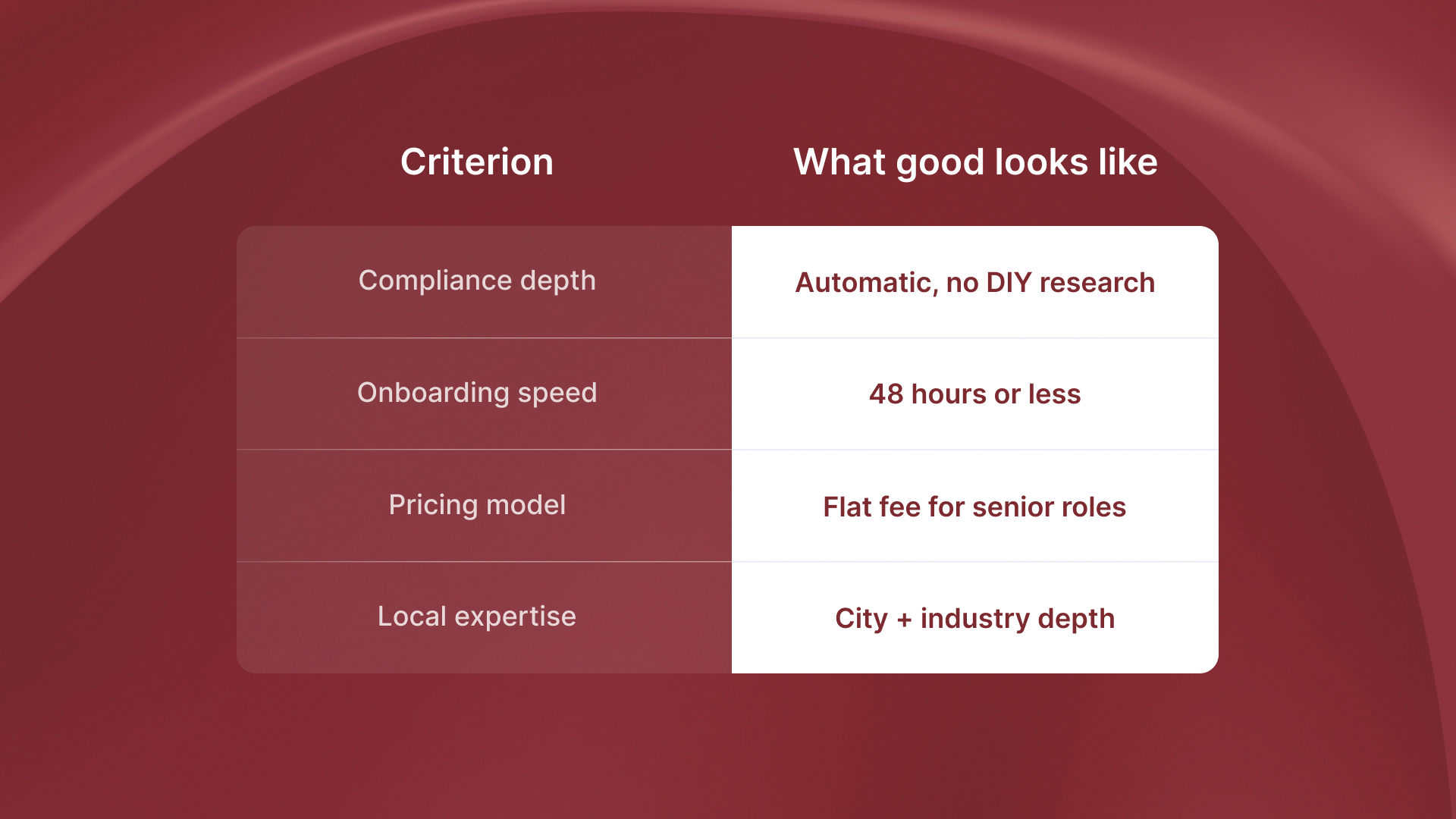
Compliance depth
Does the provider handle provincial variations automatically, or will you need to research Ontario vs BC requirements yourself? Ontario has statutory holidays like Family Day on the third Monday in February. British Columbia observes BC Day on the first Monday in August. CPP and EI rates apply federally, but provincial tax withholding varies. Quebec requires provincial parental insurance plan (QPIP) contributions that other provinces don't.
Onboarding speed
Forty-eight-hour setup is table stakes for competing in active hiring markets. Engineers evaluating multiple offers won't wait weeks for you to process paperwork. Speed determines whether you close candidates or lose them to faster-moving competitors.
Pricing transparency
Flat monthly fees or percentage-of-salary models scale differently. A $500/month flat fee costs the same whether you hire a $80K intermediate developer or a $150K senior architect. A 10% revenue share model costs $800/month for the intermediate developer but $1,500/month for the senior hire. Run the math against your target salary ranges before committing.
Local expertise
Can the provider explain Toronto vs Vancouver talent pools, or do they treat Canada as one undifferentiated market? Toronto concentrations run heavy in fintech and enterprise SaaS (Shopify, Wealthsimple, Thomson Reuters alumni). Vancouver skews toward gaming, visual effects, and cloud infrastructure (Electronic Arts, Unity, AWS alumni). Waterloo produces strong systems engineering and AI talent from university pipelines.
Market timing and competitive pressure
The Canadian talent market won't stay underpriced indefinitely. As more U.S. companies discover the arbitrage, competition increases and rates adjust. The decision isn't whether to explore cross-border hiring. It's whether to move before the window closes.
U.S. startups competing for senior engineers at $250K in overheated markets have an alternative three hours away. Infrastructure removes the entity setup barrier entirely.
Next steps
Startups can scale engineering teams without burning runway on Bay Area pay. They can access Canadian talent pools through specialist platforms like GrowTal. GrowTal connects businesses with pre-vetted technical professionals. For companies exploring capital-efficient talent strategies, cross-border hiring delivers equivalent quality at sustainable economics. Read more on optimizing remote hiring for venture-backed growth.

.png)


.png)



%2520(8).png)