
.svg)
A step-by-step guide to hire Canadian developers for U.S. startups

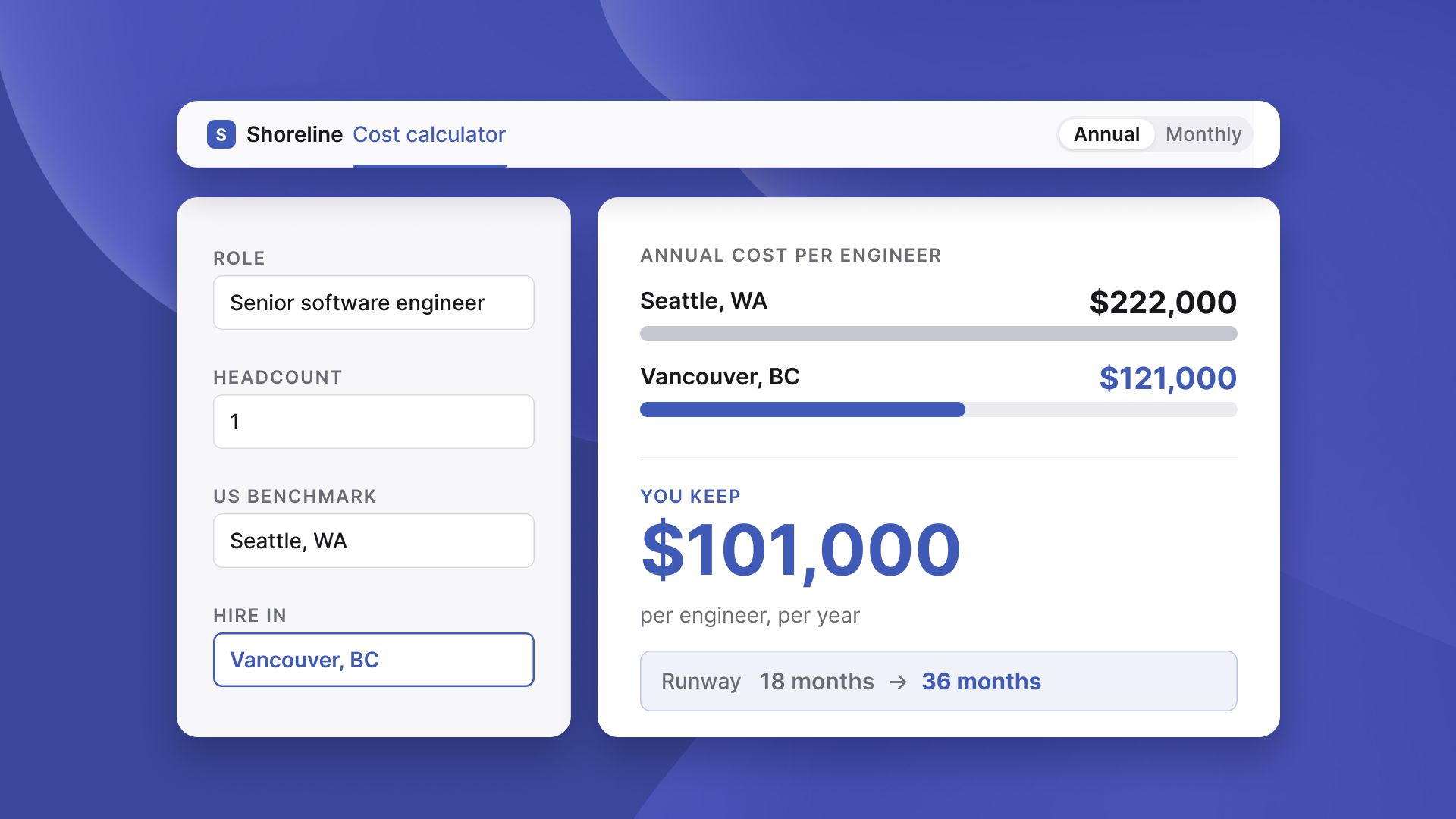
A software engineer in Seattle costs $222,000 per year. The same engineer in Vancouver costs $121,000. For a venture-backed startup, that delta is the difference between an eighteen-month runway and a three-year one. The burn rate crisis has forced founders to rethink domestic hiring. A practical solution exists just across the border: hiring Canadian developers.
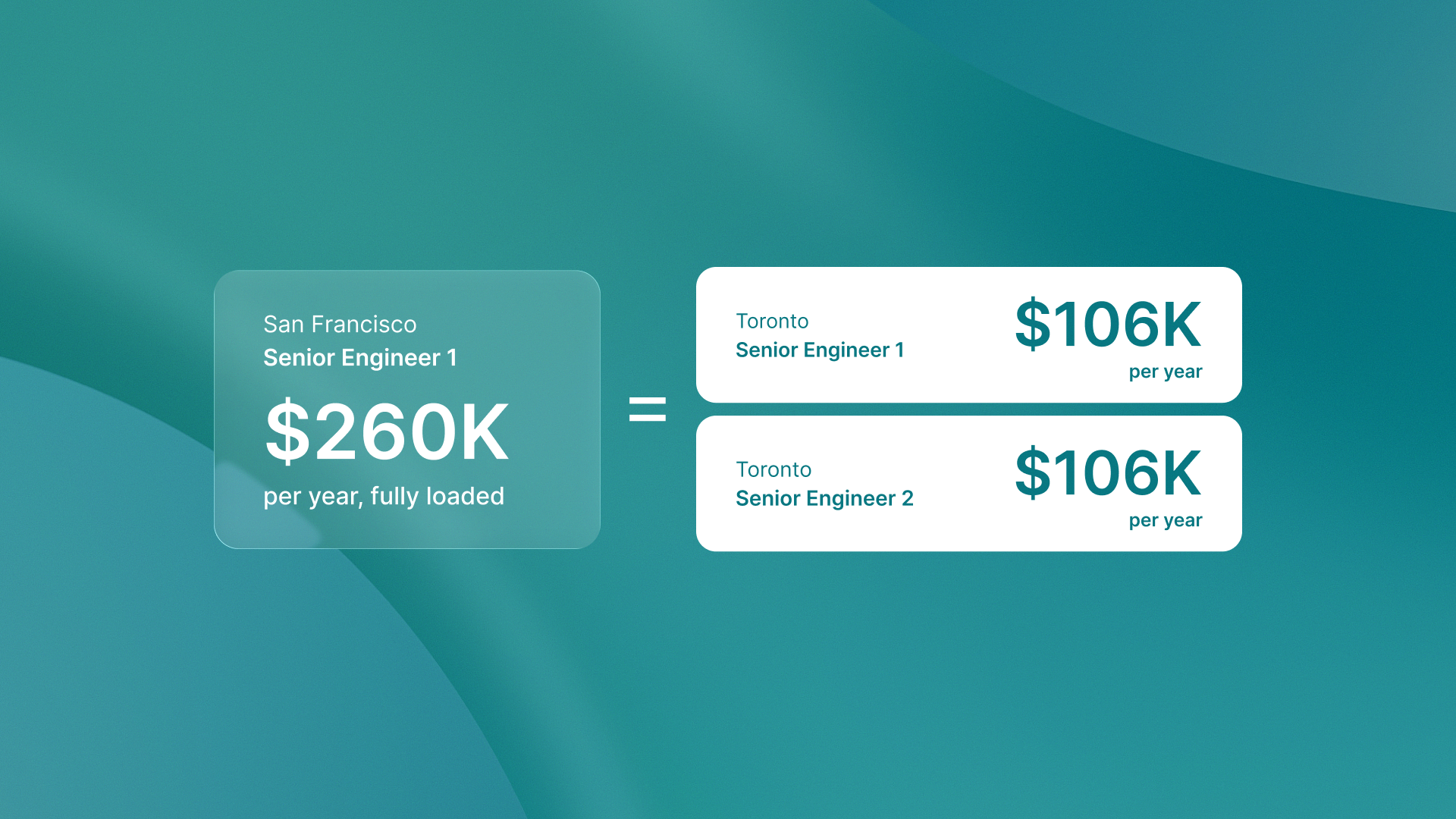
Canada offers a strong talent corridor for U.S. startups, with access to experienced technical talent and substantial timezone overlap. You can access senior software engineer salary savings that effectively double engineering capacity for the same dollar amount. Execution remains the primary hurdle. Managing provincial taxes and cross-border payroll logistics requires a clear framework to avoid mistakes.
Step 1: choose your legal framework
Before posting a job description, you must decide how the individual will be legally classified. Most startups choose between direct contractor status or an Employer of Record (EOR), but as your team grows, the trade-offs between EOR or entity formation become more complex, requiring a careful look at headcount trajectory and budget constraints. Evaluating this strategy shows that hiring in Canada provides superior cultural alignment compared to traditional offshore models, highlighting the benefits of outsourcing to Canada vs offshore.
T1-NAFTA/CUSMA status
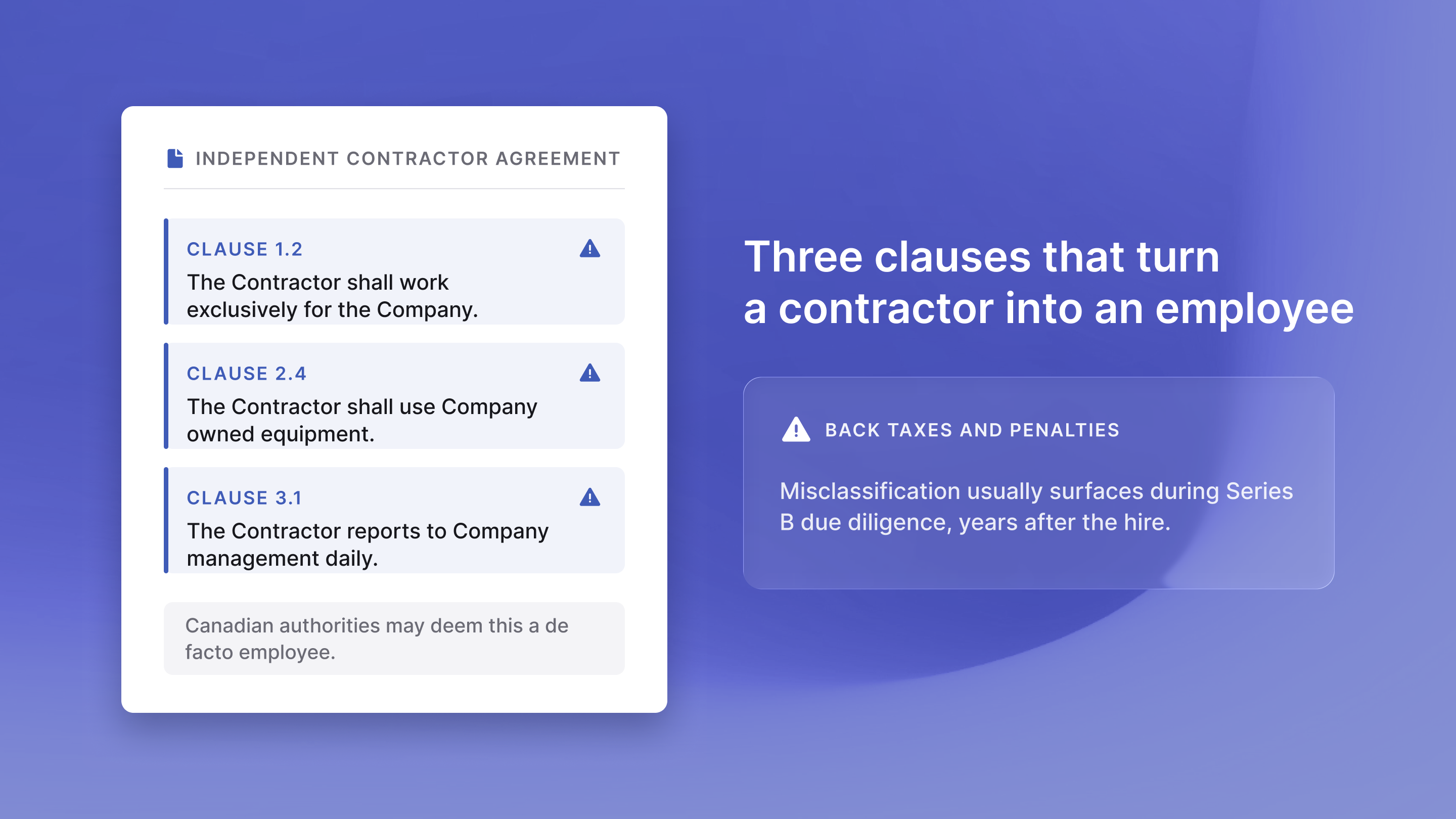
Under the CUSMA agreement, U.S. companies can hire Canadian professionals as independent contractors. This is the fastest path, but it carries misclassification risk. If a contractor works exclusively for you, uses your equipment, and follows your direct management, Canadian authorities may deem them a de facto employee. This triggers back taxes and penalties. These costs often surface during Series B due diligence if you have not accounted for strict Canadian developer compliance.
The EOR advantage
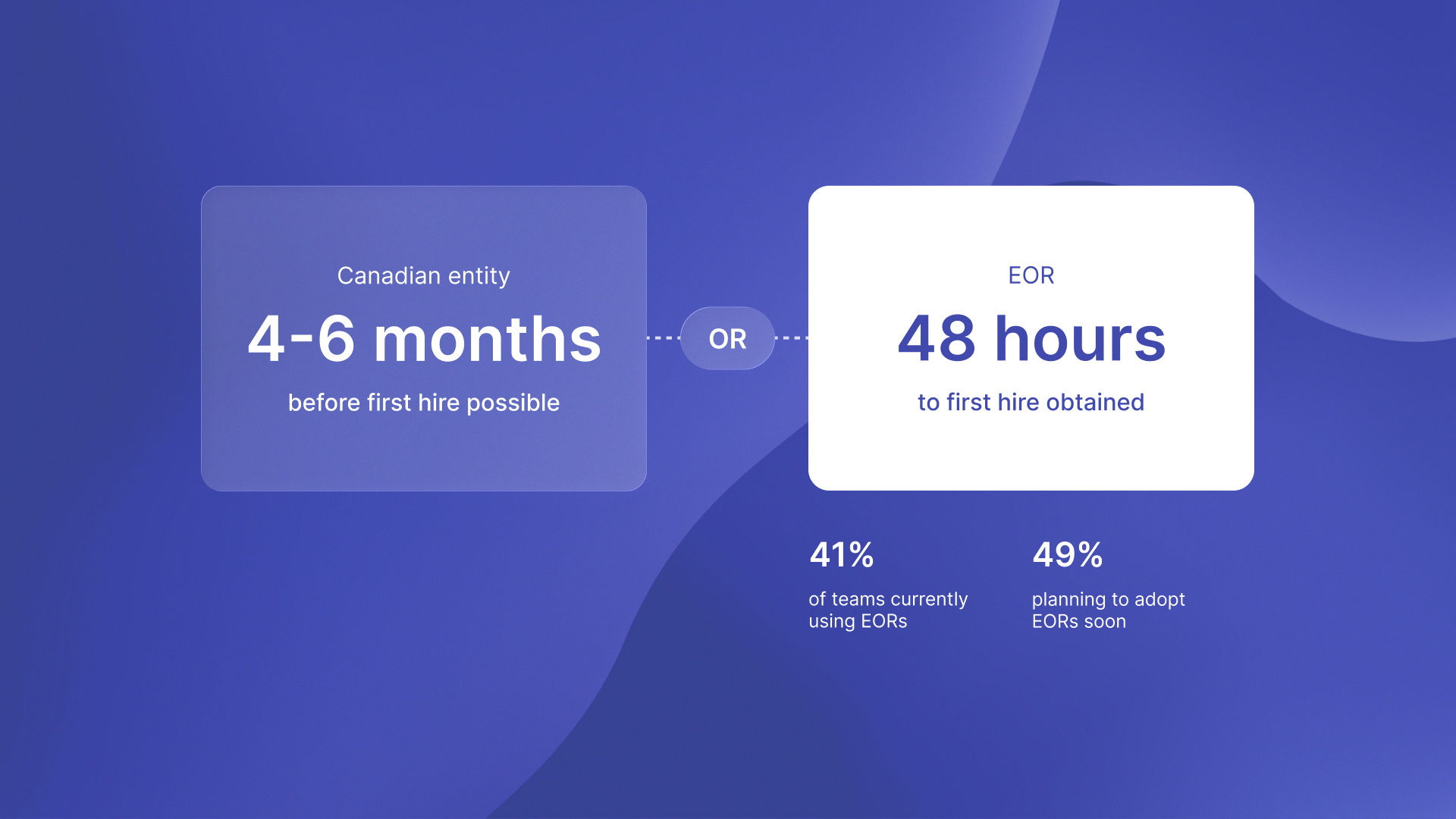
An EOR acts as the legal employer in Canada while the developer works for you, handling all local tax withholdings and labor law compliance. This model is the most efficient way to hire Canadian developers without setting up an entity, often allowing startups to move from offer letter to onboarding in as little as 48 hours.
Setting up a local entity usually takes months of legal work and local registration. Using a specialized partner provides benefits for employing Canadians through an EOR, including strategic timezone alignment without the overhead of a foreign subsidiary.
Step 2: source via academic hubs
The Canadian tech talent marketplace is concentrated around specific academic hubs and professional networks. To find top-tier engineers, focus on areas where local density is highest.
- University of Waterloo: Widely considered the top engineering school in North America for co-op talent.
- University of Toronto: A global leader in AI and ML research.
- Specialized Job Boards: You can use tools to scrape remote careers from platforms like We Work Remotely or local tech Slack channels to build targeted candidate lists.
- Tech Hubs: Focus your search on Toronto, Vancouver, and Montreal for the highest concentration of senior talent.
Step 3: navigate provincial employment law
Canadian employment law varies by province, meaning you cannot apply a blanket policy across the country. Because each region has its own rules for vacation pay, statutory holidays, and termination notice, many founders fall into common compliance traps when hiring in Canada by assuming a one-size-fits-all approach. Understanding Canadian employment law for US companies is essential for long-term success.
Provincial compliance requirements
Step 4: the 10% cashback reward
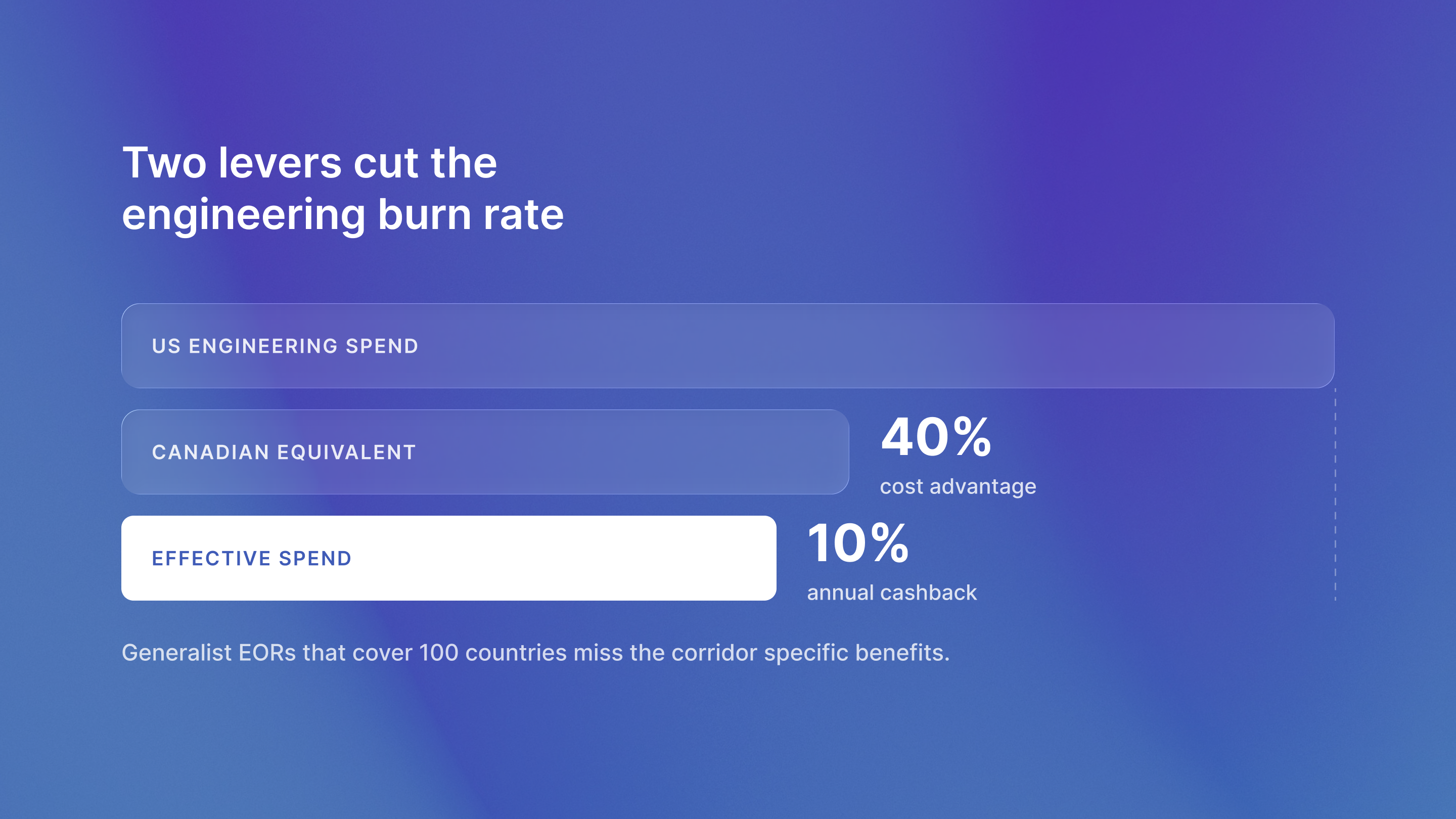
Scaling a team is expensive, even with a 40% cost advantage. This is why specialized infrastructure acts as a financial lever. According to Shoreline, specialized Canadian EOR services offer a 10% annual cashback reward on eligible tech hires. This lowers your effective burn rate further, allowing you to reinvest that capital into additional headcount or product development.
Generalist EORs that cover 100 countries often miss these corridor-specific financial benefits. By focusing on the U.S.-Canada bridge, you secure better compliance and a lower total cost of ownership. The arbitrage opportunity in Canadian tech salaries is real for those who build the infrastructure to capture it correctly.
What to do next
- Audit your current engineering hiring plan and identify roles that could be filled remotely in the same timezone.
- Compare the total cost of a U.S. hire against a Canadian equivalent using a cost-of-living comparison.
- Select a partner specialized in hiring Canadians for U.S. companies to handle payroll and local compliance without legal entity setup.
- Begin sourcing talent from the University of Waterloo and University of Toronto pipelines.
Schedule a discovery call to discuss your specific hiring needs and learn how our rigorous vetting process ensures operational excellence.

.png)


.png)




%2520(8).png)