
.svg)
Software engineering recruitment in Canada: the 2026 talent landscape report


If you are a founder paying San Francisco rates for mid-level backend engineers, you are burning capital for status. The math of 2026 engineering recruitment has shifted north. It has moved away from the unsustainable bidding wars of Silicon Valley. Instead, it moves toward the structural arbitrage available in the Canadian tech talent marketplace. The unit economics of early-stage scaling have become increasingly brutal. For most venture-backed firms, the solution is no longer domestic.
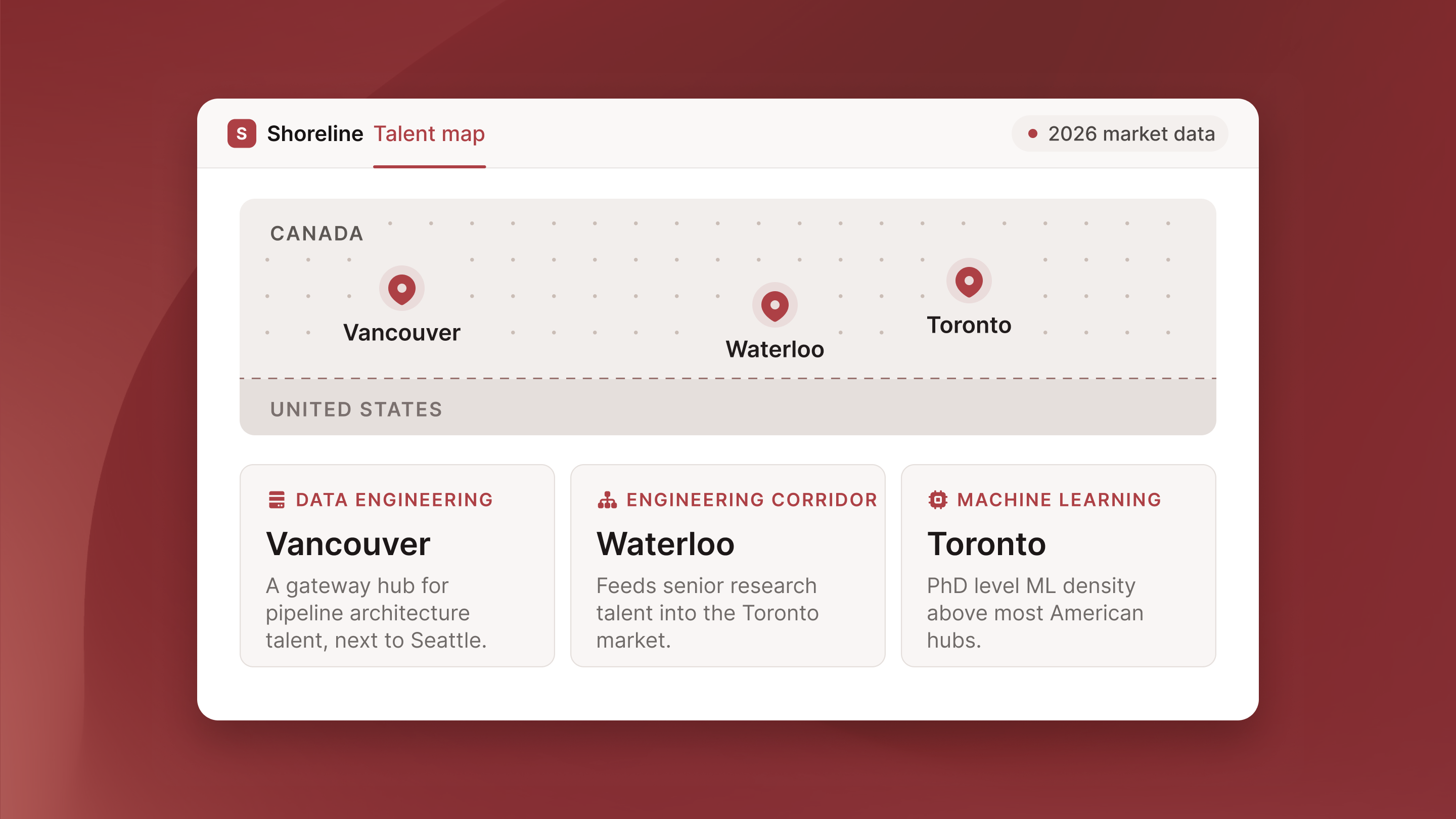
The 2026 talent map: Toronto, Vancouver, and Waterloo
Toronto's ML dominance
Toronto has solidified its position as a global leader in artificial intelligence and machine learning. U.S. satellites seeking high-level ML expertise often find a high concentration of PhD-level talent in the Toronto-Waterloo corridor. This concentration often exceeds what is available in most American hubs outside of the Bay Area. The city is a primary engine for foundational AI research and production-grade engineering.
I often point founders to the specific density of ML engineers in Canada who are building autonomous agent architectures. These teams are capable of iterating in real time. They do not have the timezone friction that plagues offshore alternatives. By hiring in Toronto, a Series A startup can secure senior talent that would be unaffordable in New York or San Francisco. This allows them to maintain high velocity while preserving their runway, especially when compared to the coordination overhead of offshore alternatives.
Vancouver's data engineering surge
Vancouver has seen a massive influx of data engineering talent, driven by its proximity to Seattle and its role as a gateway for international tech professionals. The city has become a strategic hub for data-intensive startups that require complex pipeline architecture. While the technical bar remains exceptionally high, the market is far less saturated than its southern counterparts. This allows for faster time-to-fill metrics, provided recruiters leverage automated sourcing pipelines to programmatically identify and vet niche technical profiles across fragmented platforms.
Why generalist hiring is dead in the Canadian tech talent marketplace
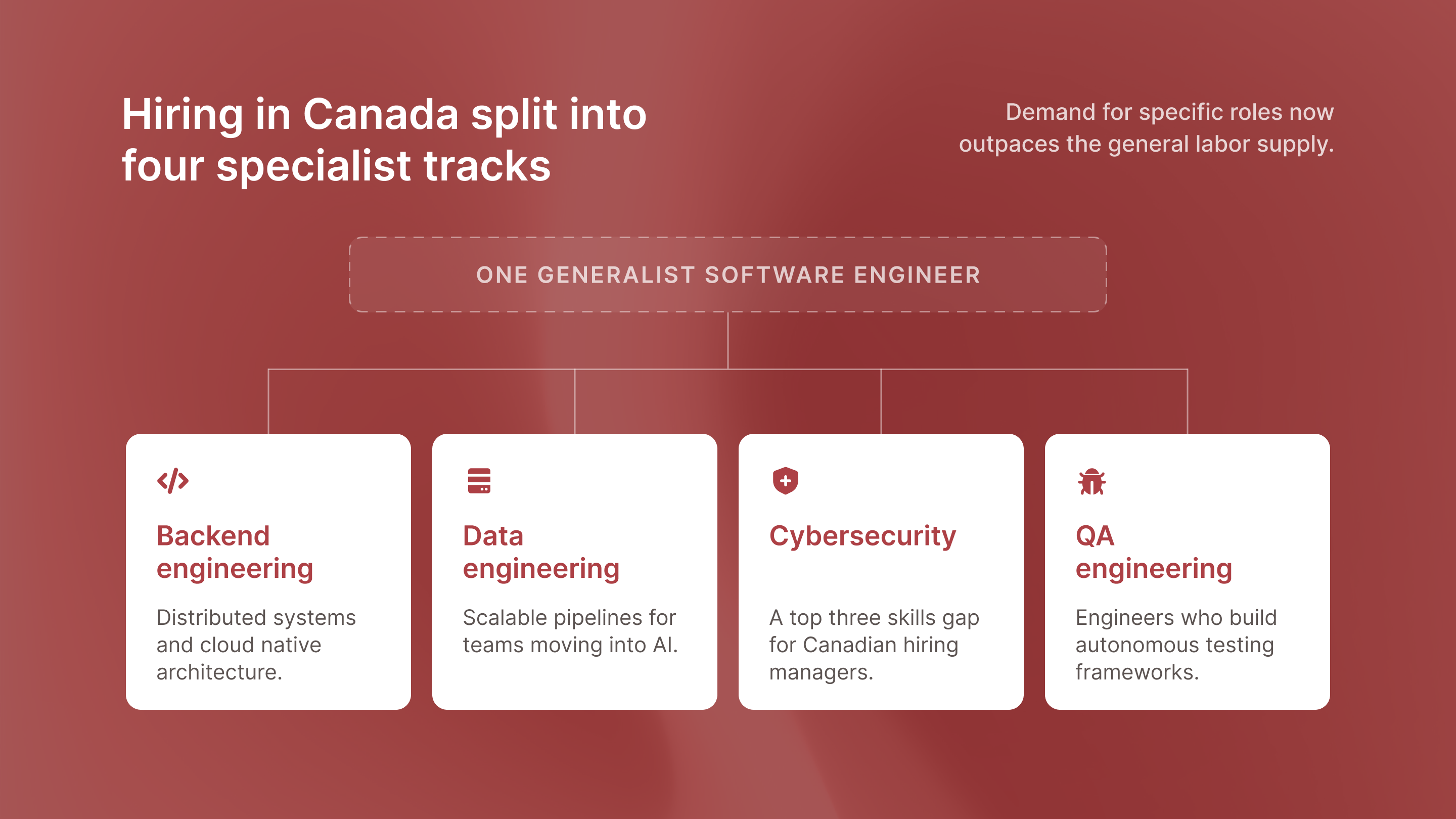
We have entered an era where generalist software engineering recruitment Canada is no longer the primary driver of growth. The market has split into high-demand niche roles that require specialized technical stacks. Modern hiring data suggests the demand for specific roles now far outpaces the general labor supply. According to Robert Half, software developers and data engineers are the most sought-after roles in the current market.
- Backend engineer hiring Canada: Startups are specifically targeting engineers with deep experience in distributed systems and cloud-native architecture.
- Data engineering: Building scalable data pipelines is the top priority for firms moving into the AI-native space.
- Cybersecurity: Cybersecurity remains one of the top three areas where Canadian hiring managers face significant skill gaps, according to CompTIA.
- QA engineer recruitment Canada: The shift toward autonomous testing requires specialized engineers who can build autonomous testing frameworks rather than executing manual scripts.
The math of nearshoring: 40% savings and 10% cashback
Cost efficiency comparison
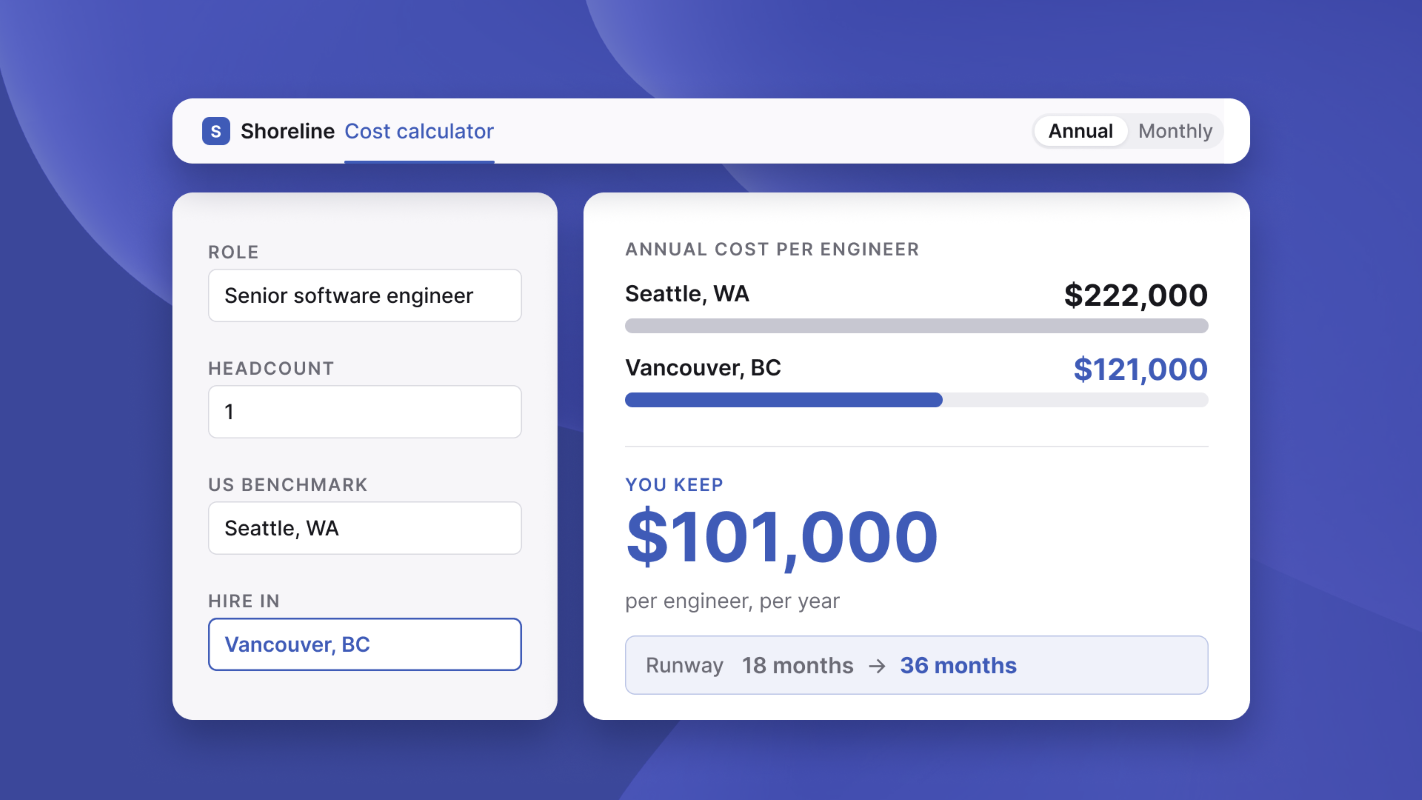
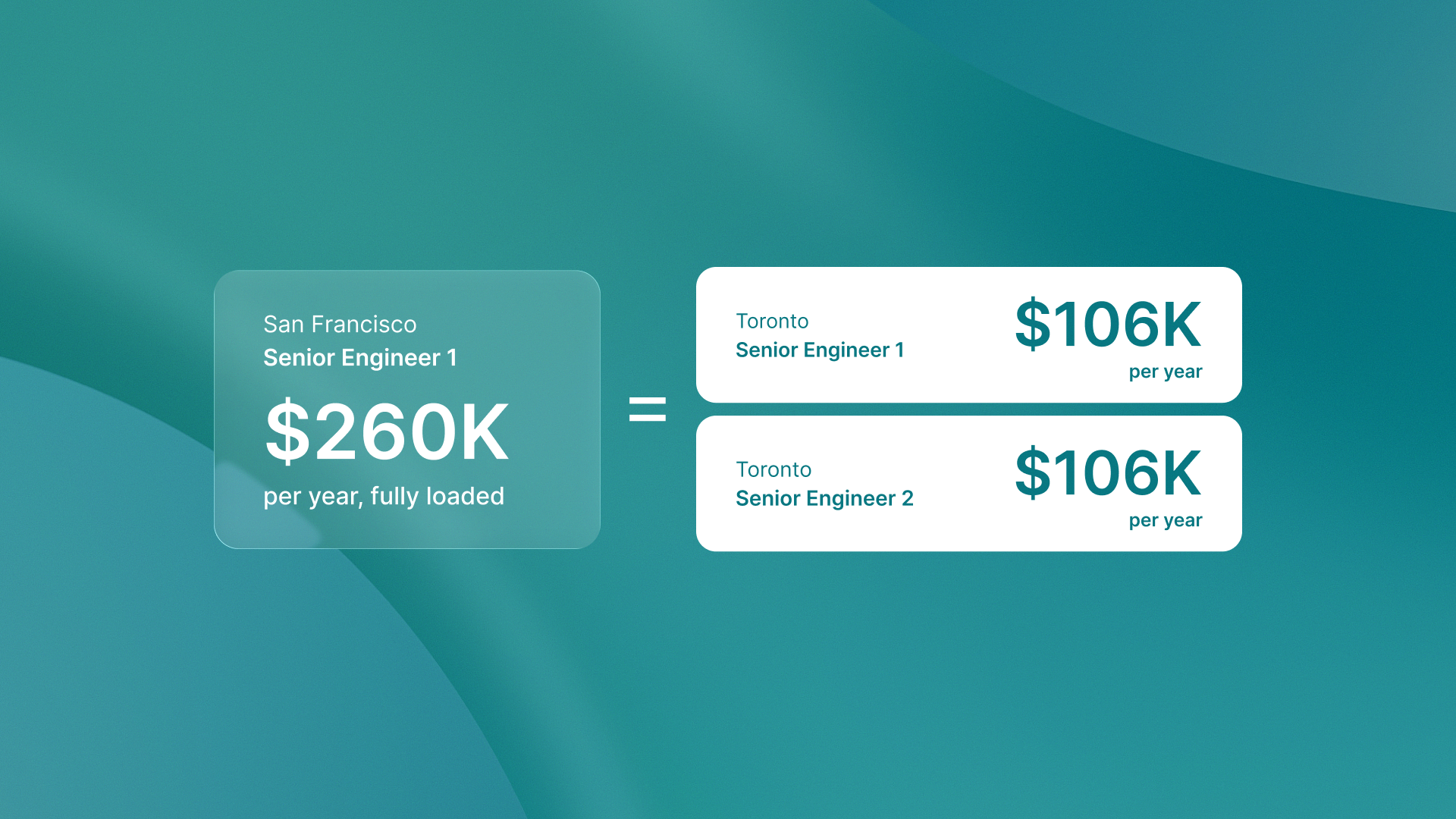
Here is the thesis most startups miss: Canadian nearshoring offers a 40% cost advantage while providing Silicon Valley-level talent. This is about accessing market rates for senior engineers that are structurally lower due to currency dynamics and cost-of-living differences. When you factor in tax credits and specialized onboarding for remote workers, the capital efficiency is undeniable.
The ROI model for Canadian hiring is accelerated through specialized incentives. I have seen founders drastically reduce their burn rates by following a three-step model:
- Replace one US-based senior headcount with a Canadian lead at 60% of the cost.
- Utilize a specialized partner like Shoreline to handle all payroll, provincial tax compliance, and benefits without a local entity, avoiding hidden recruiting and time-to-fill expenses.
- Leverage Shoreline's 10% annual cashback model on eligible tech hires to reinvest into product development.
Overcoming the skill gap: specialized recruitment
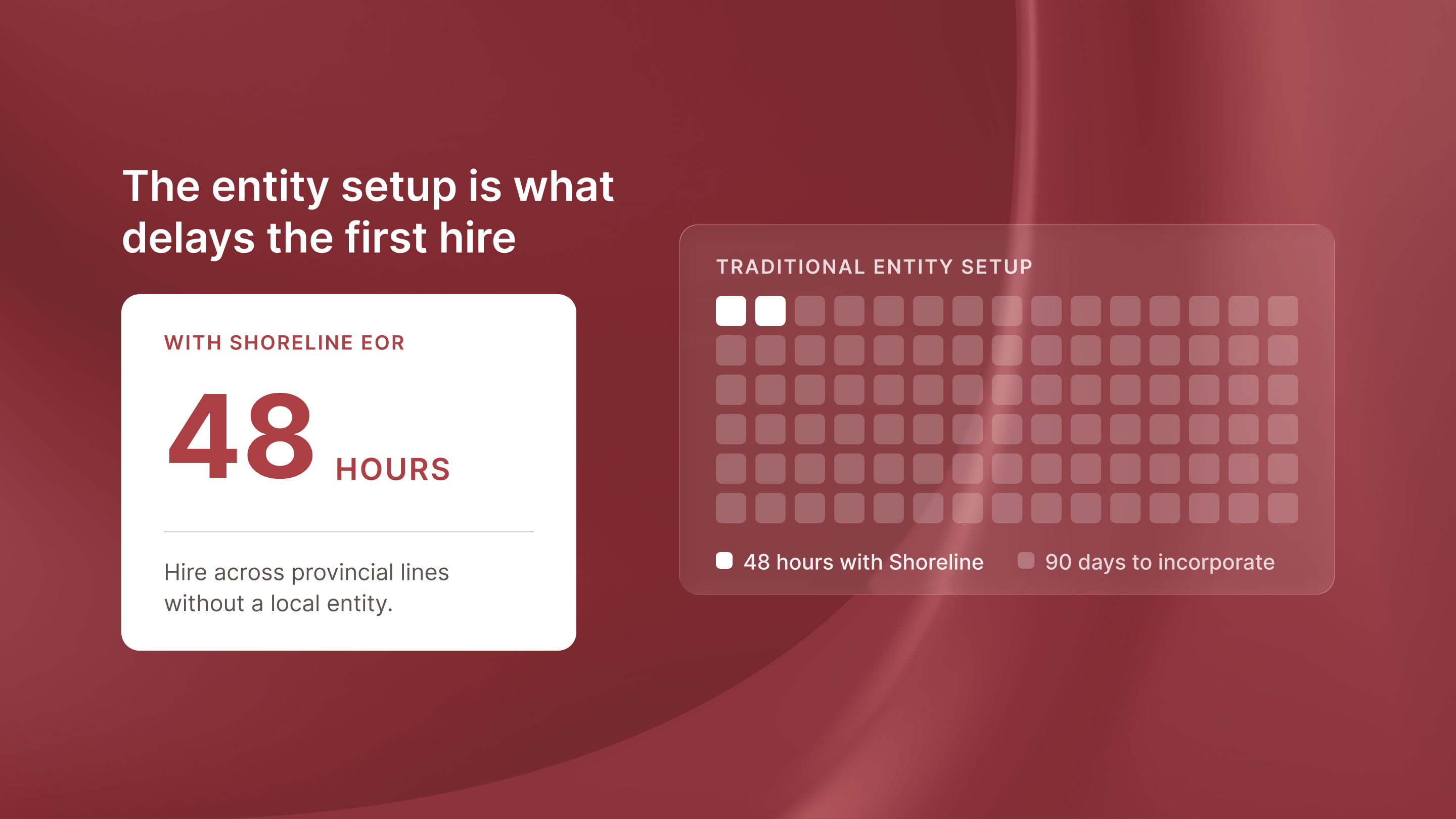
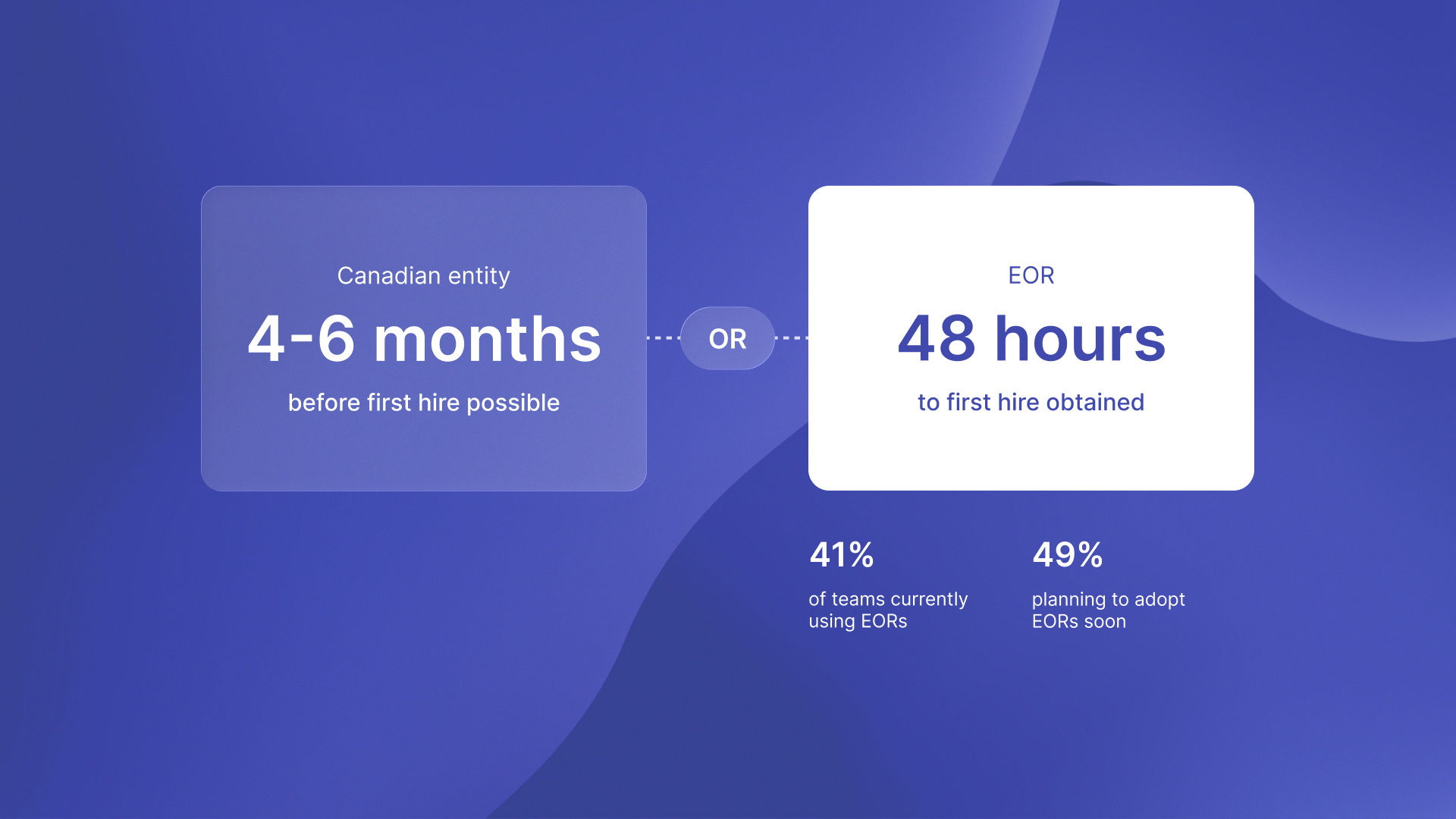
A specialized Employer of Record (EOR) like Shoreline bridges the cybersecurity and cloud skill gap by providing localized sourcing and compliance infrastructure. These platforms allow U.S. startups to hire across provincial lines in 48 hours, ensuring that technical teams scale without the 3-month delay of traditional entity setup or legal navigation. Once the logistical hurdles are cleared, prioritizing remote employee engagement becomes the critical next step to ensure these distributed developers remain deeply integrated with the core product vision.
What to do next
- Audit your current burn rate and identify which backend or ML roles could be sourced in Toronto or Vancouver.
- Compare the unit economics of Canadian hires against your current SF or NYC salary bands, noting how San Francisco salary benchmarks are becoming unsustainable.
- Partner with a technical EOR like Shoreline that understands the specific engineering manager recruitment Canada landscape and helps you prioritize equity for founding roles.
- Pilot one niche hire in a high-demand role like data engineering to test the integration and velocity.
Ready to scale your engineering team with top-tier Canadian talent? Book a call with Shoreline today.
.png)


.png)




%2520(8).png)