The Compliance Checklist for Remote Canadian Teams: Beyond the EOR Basics

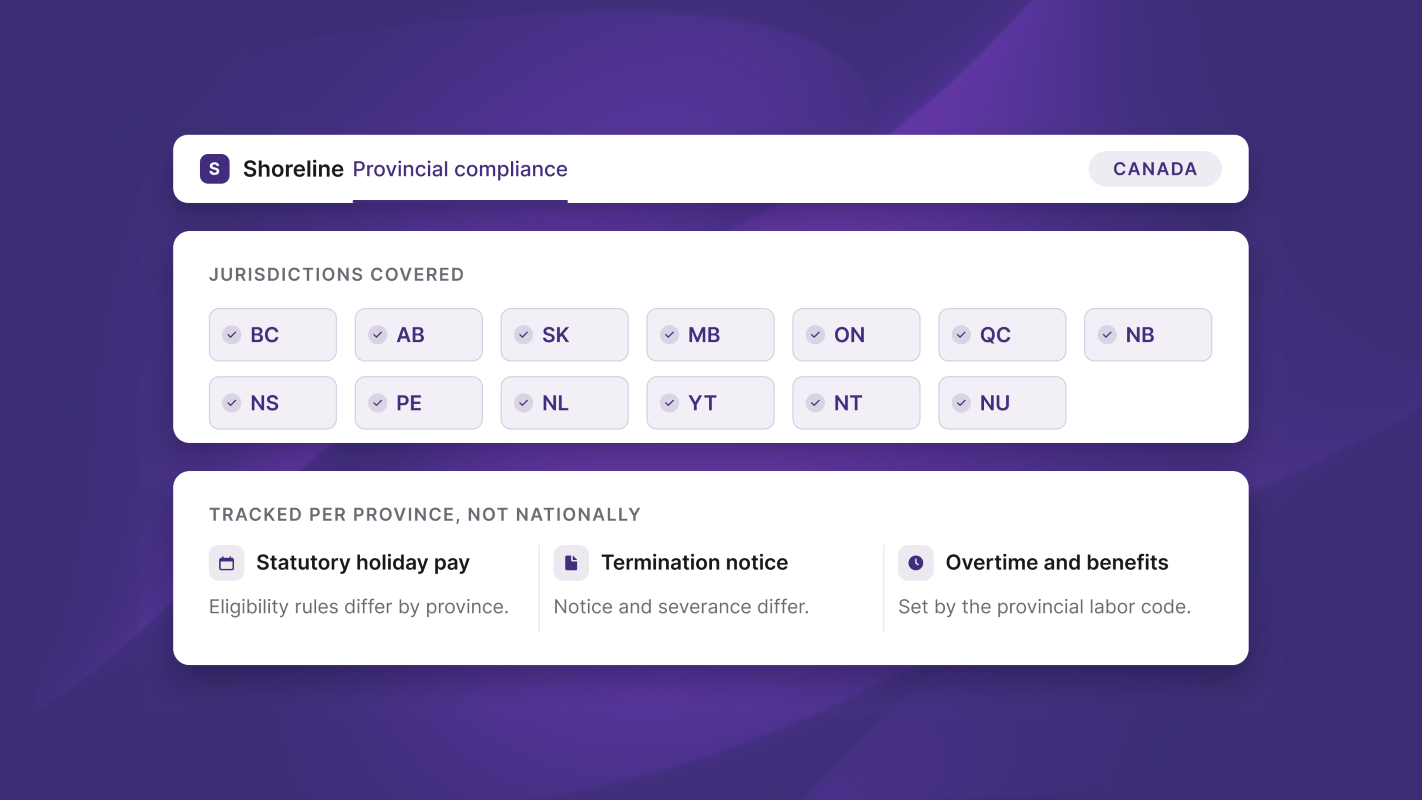
If you are a founder who thinks a global Employer of Record (EOR) has fully solved your Canadian expansion, you are likely one provincial audit away from a 25% penalty. I have seen far too many U.S. tech teams treat Canada as a single labor market. It is not. In reality, Canada has thirteen distinct regulatory jurisdictions. The legal liability for provincial standards remains a major bottleneck for scaling startups.
While generalist platforms handle the basics of payroll, they often miss the complex math of provincial labor acts. If you want to protect your runway, you need to understand that compliance for remote Canadian teams is a game of provincial precision. It is not about federal generalities. This lack of nuance often leads to costly compliance traps when hiring across the border.
The provincial patchwork: why federal compliance for remote Canadian teams does not exist
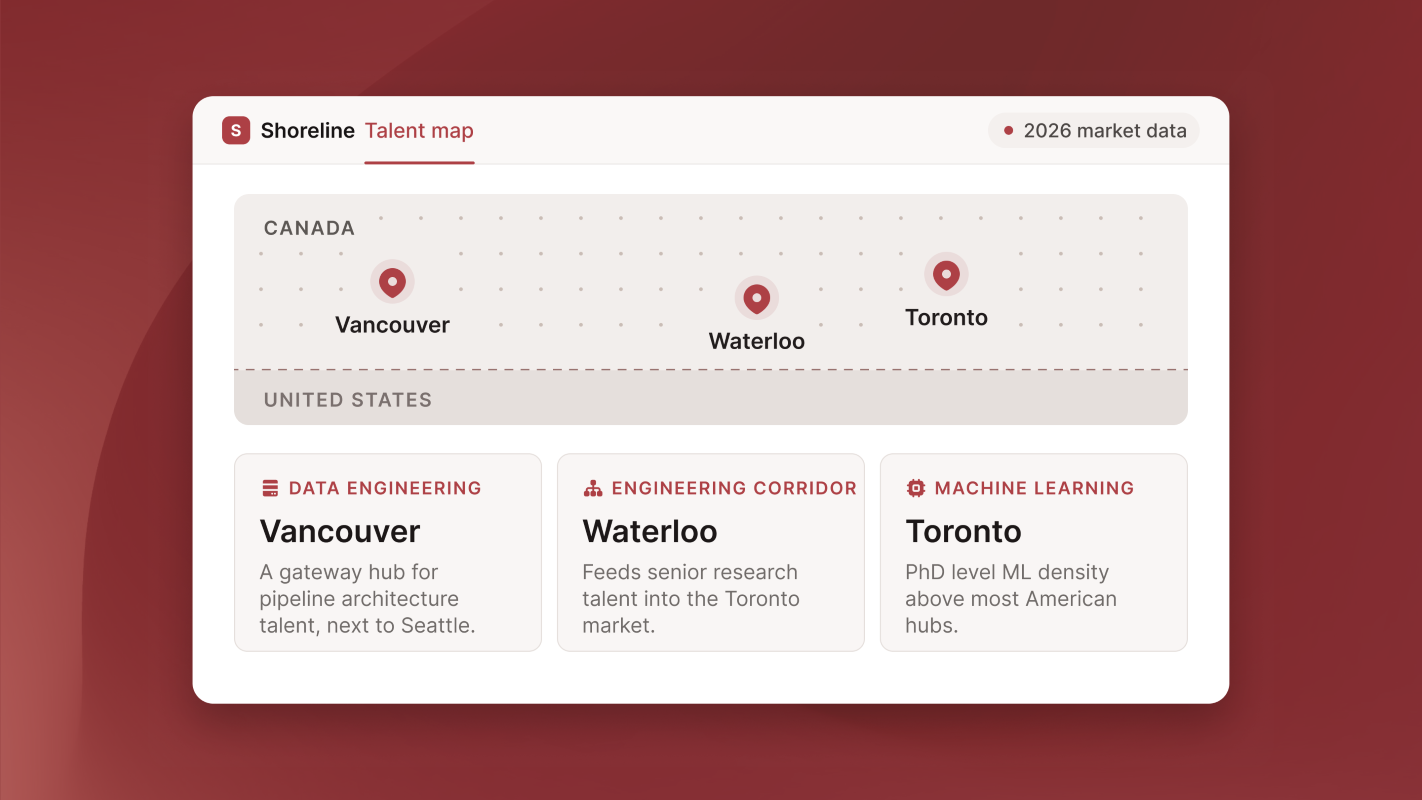
Most U.S. founders assume a single national law governs daily worker protections. This is a myth. Daily employment standards are dictated by provincial acts, such as Ontario’s Employment Standards Act. This means your remote developer in Toronto has different legal protections than your engineer in Vancouver. Understanding the nuances of Canadian employment law for US companies is essential to avoid local litigation.
Statutory minimums: notice, severance, and vacation
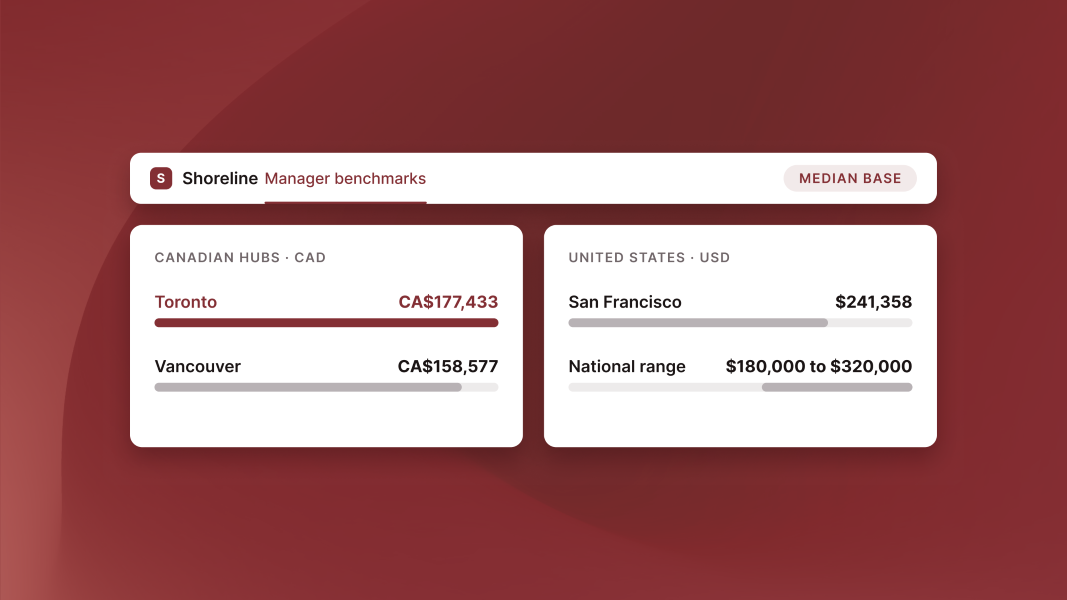
Statutory requirements for notice periods and vacation pay vary across the country. Ignoring these differences leads to large hidden liabilities during team restructuring. Below is a snapshot of how these minimums contrast in major tech hubs:
Provincial labor standards comparison
Managing the legislative burden
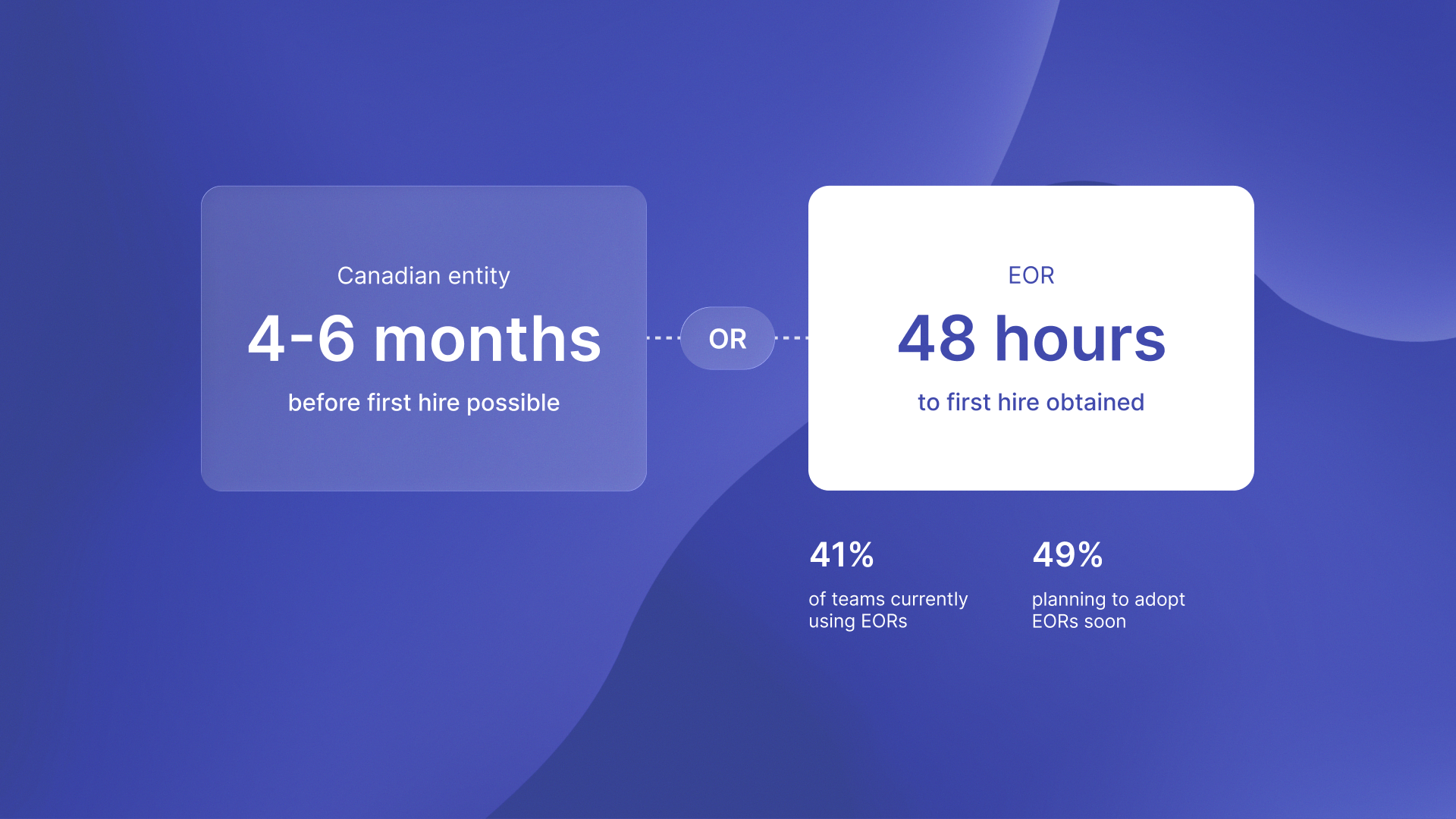
I often point founders to the fact that specialized Canadian employment models provide a necessary layer of protection that generalists miss. When you scale, these small statutory differences add up to significant financial risks, especially if you haven't decided between using an EOR or a legal entity for your long-term roadmap. These risks are compounded if your contracts use a one-size-fits-all template.
The Quebec anomaly: mandatory dependent coverage
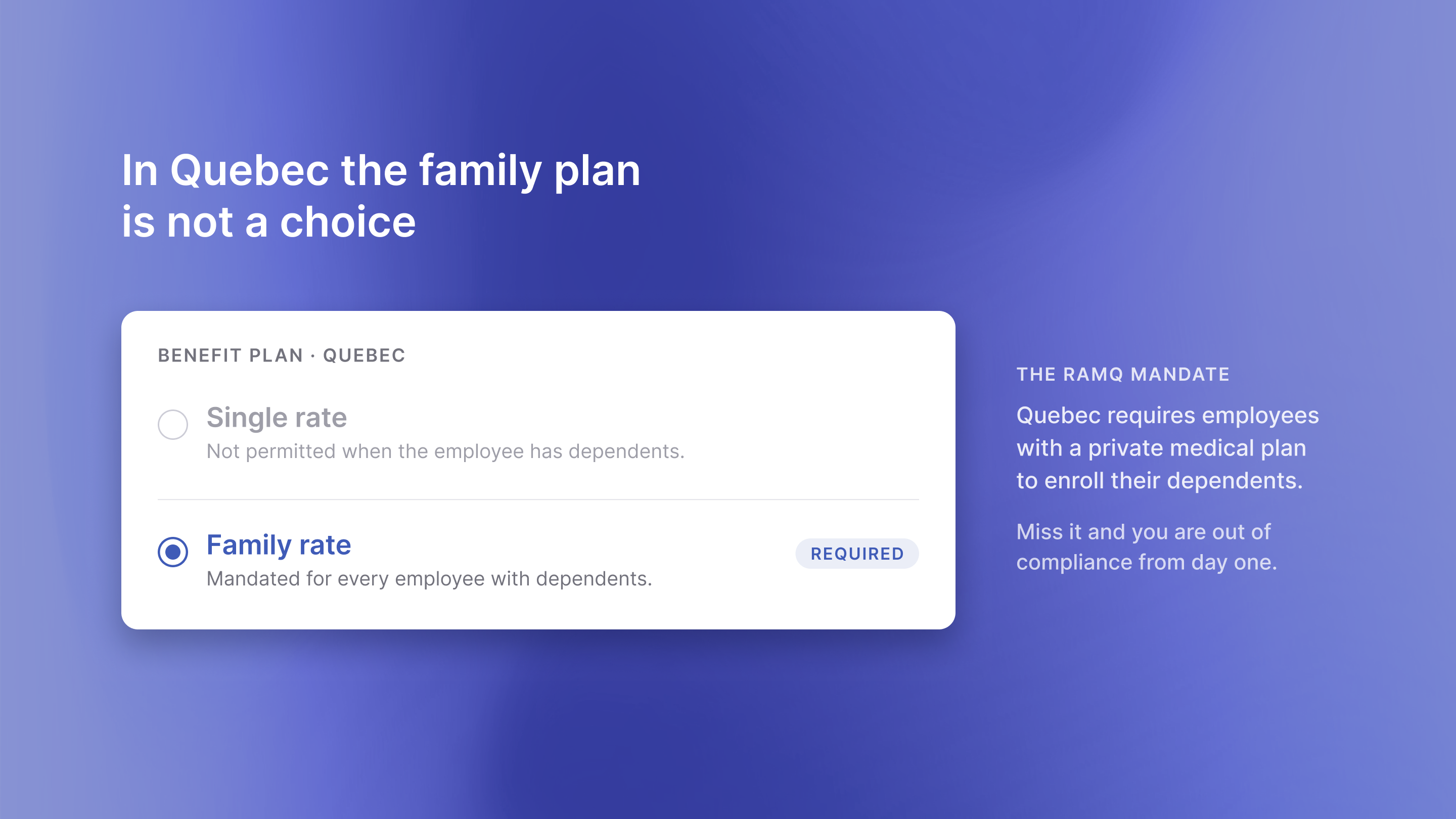
Quebec is the most complex jurisdiction for Canadian developer compliance. A specific mandate from the government health insurance board, RAMQ, requires employees with private medical plans to enroll their dependents. This is not optional.
In most provinces, an employee might choose a Single rate plan to save costs. In Quebec, they must be on a Family plan if they have a family. This creates an immediate shift in your benefits math. If your provider does not manage these enrollment requirements, you are out of compliance with provincial insurance rules from day one. Many generalist platforms fail to catch these specific regional requirements, leaving founders exposed.
Workers’ comp and the cost of misclassification
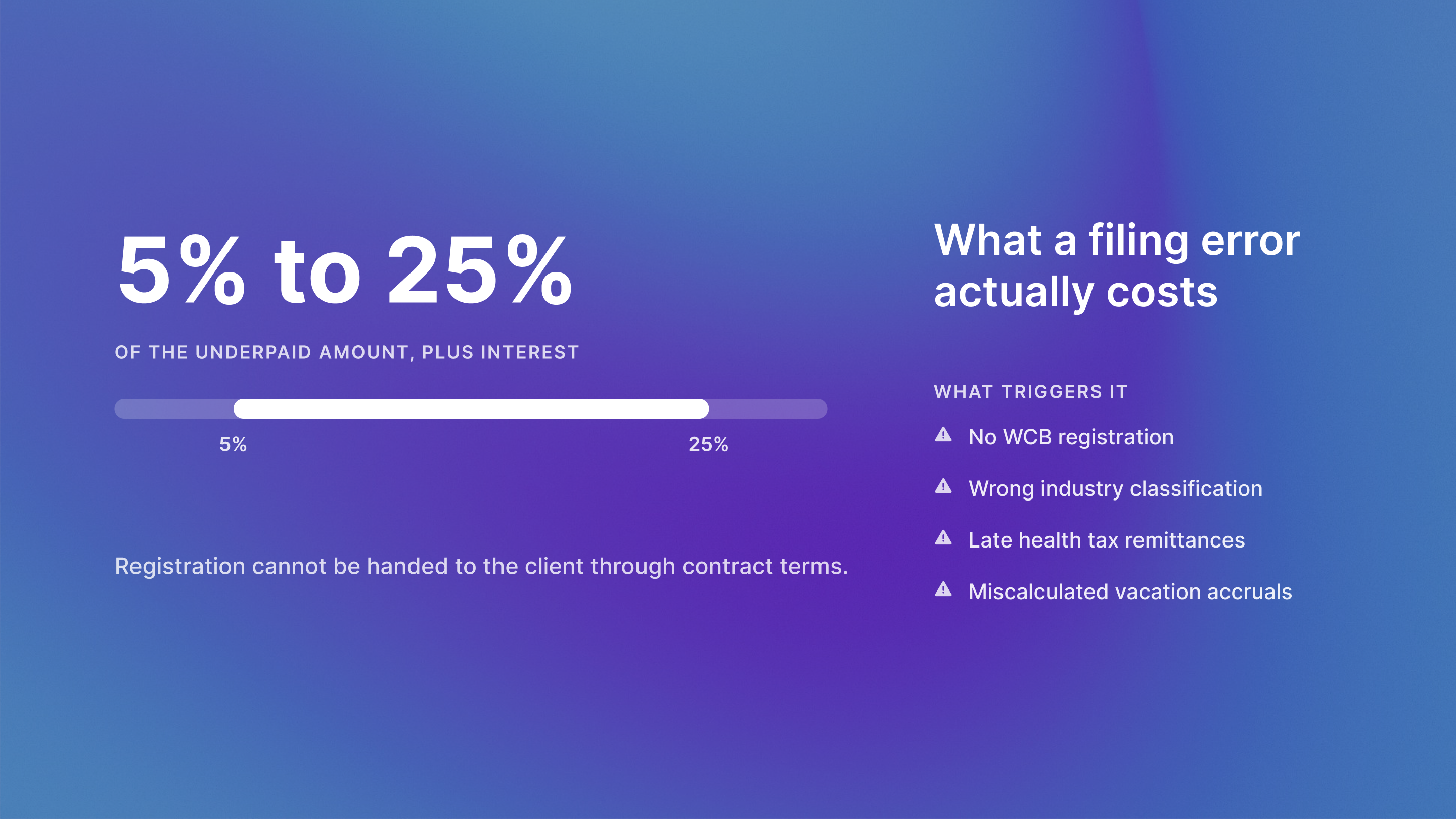
Provincial workers’ compensation is mandatory in all territories. However, it requires specific registration with provincial boards based on industry classification. You cannot simply check a box and assume it is covered. Proper registration is mandatory and cannot be delegated to the client through contract terms alone. Failure to account for these details is one of the most common compliance traps for U.S. companies.
The 25% penalty trap
If your provider misclassifies your industry or fails to file payroll taxes correctly, the financial hit is direct. Industry data shows that incorrect payroll tax filings in Canada result in penalties between 5% and 25% of the underpaid amount plus interest.
- Failure to register with the provincial WCB board
- Incorrect industry classification leading to premium underpayment
- Late filing of provincial health tax remittances
- Miscalculating vacation pay accruals on final checks
Securing the code: IP protection under provincial law
For a U.S. tech startup, your code is your primary asset. However, invention assignments must be enforceable under specific provincial laws to hold up in court. In Ontario, for example, signed clauses at the time of hiring can override certain statutory defaults. This only works if the language is precise. When weighing the benefits of outsourcing to Canada vs offshore providers, the proximity and legal alignment of Canadian IP laws often provide a significant advantage for North American startups.
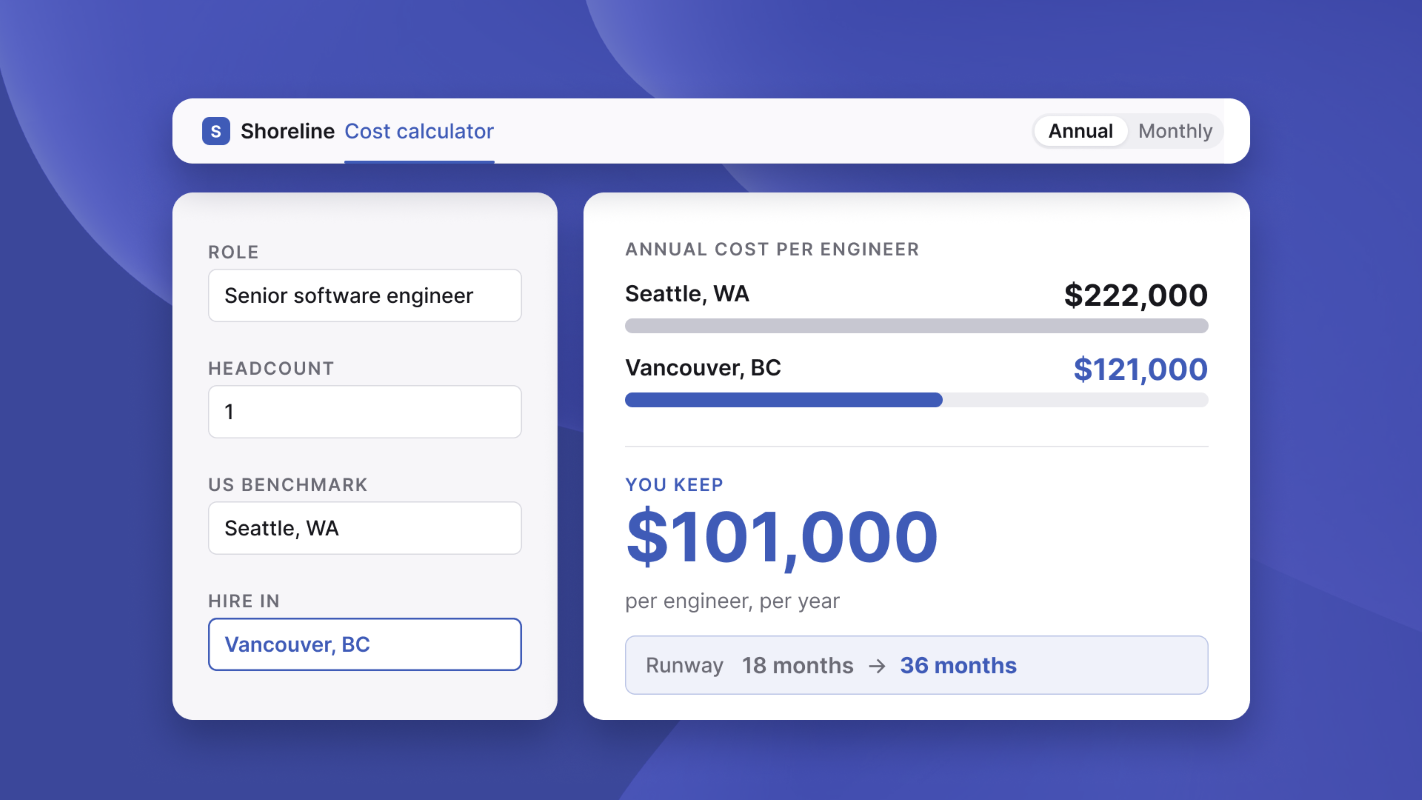
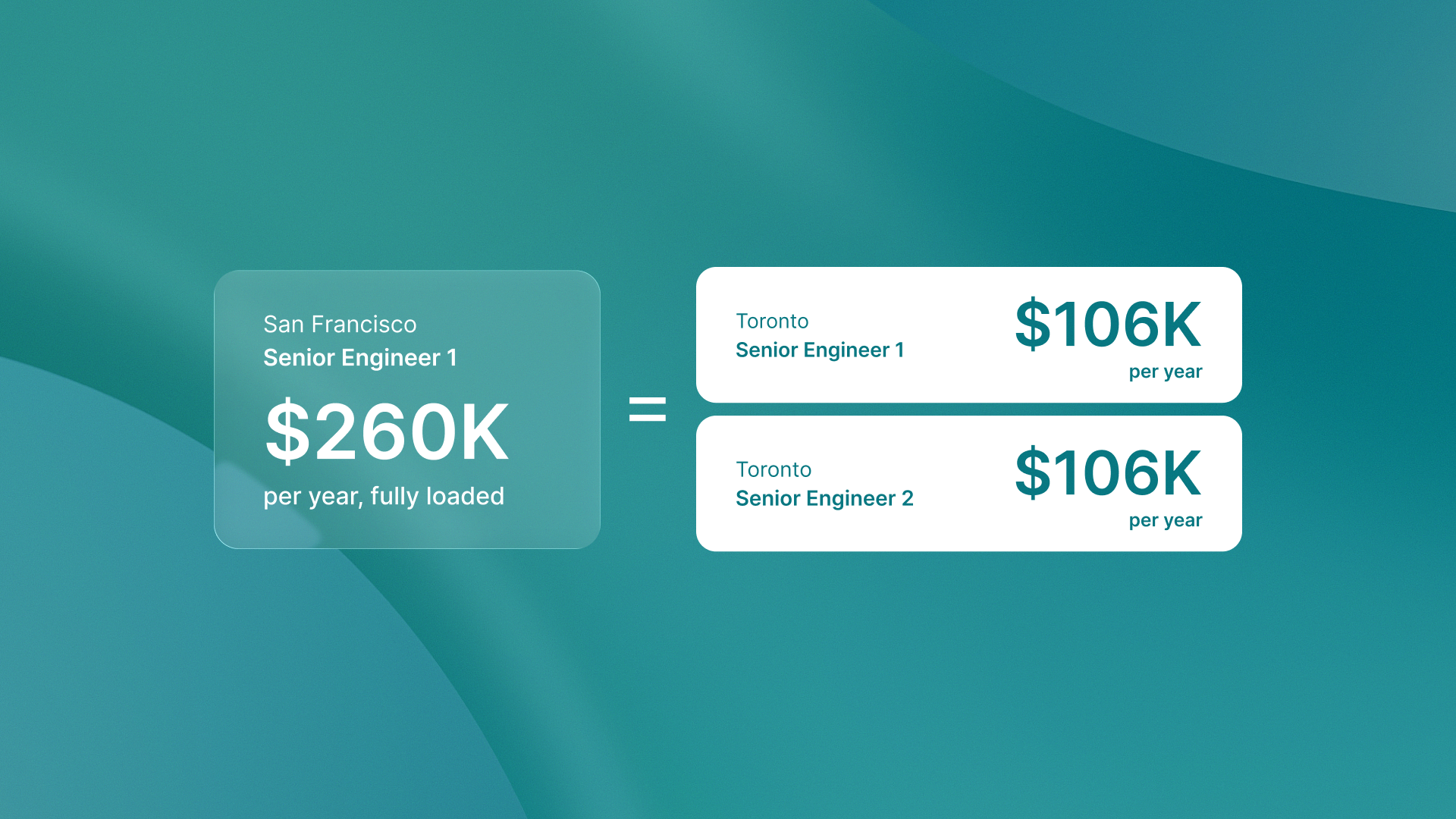
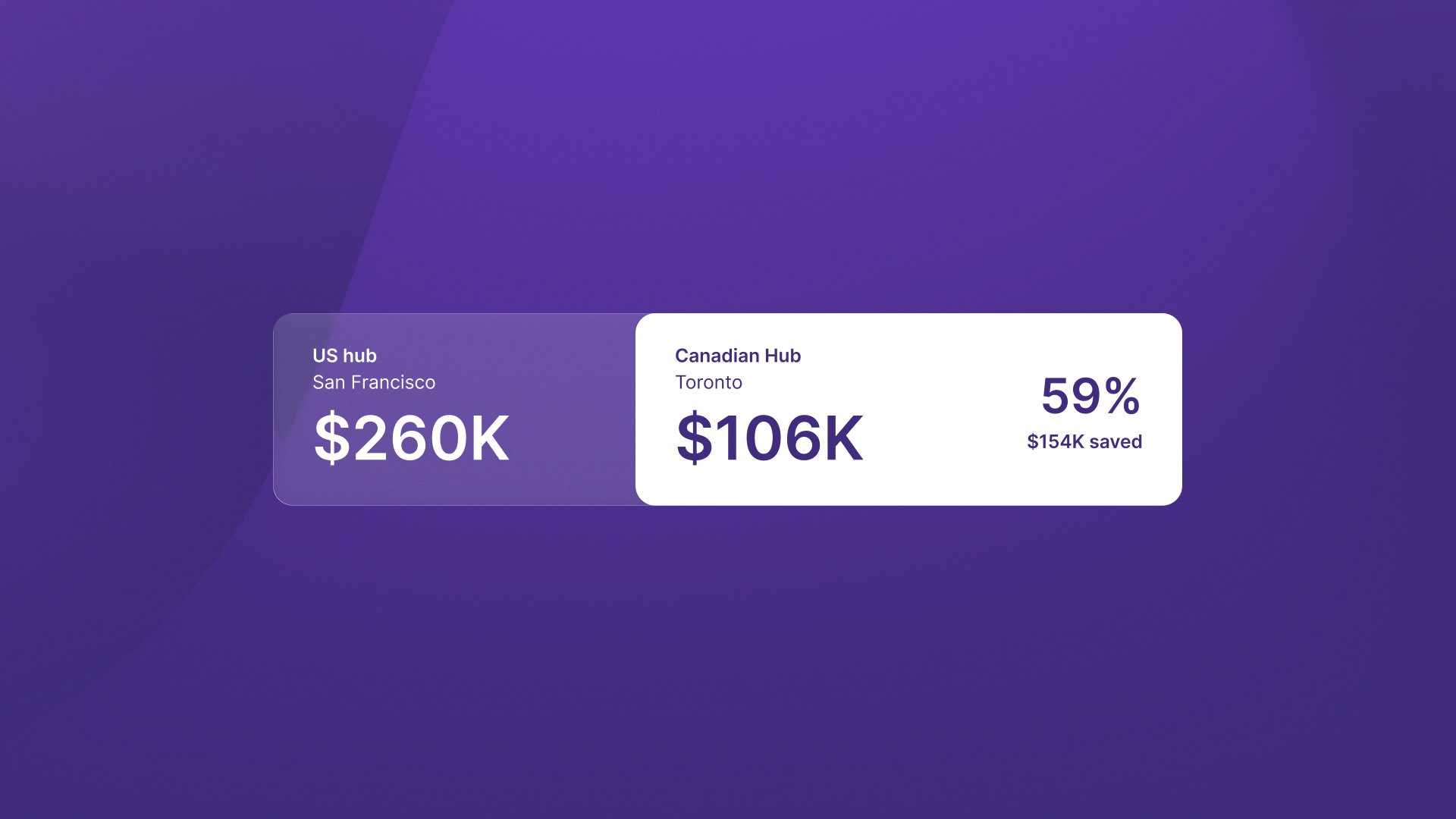
We focus on these nuances because a generic global IP template often lacks the specific provincial hooks needed for full enforceability. By leveraging nearshore salary advantages, you are already saving significantly on talent. Do not waste those savings by leaving your intellectual property vulnerable to weak legal templates.
For high-growth engineering teams, maintaining this capital efficiency is similar to using an agile scaling framework to keep fixed costs low while expanding into new markets.
What to do next
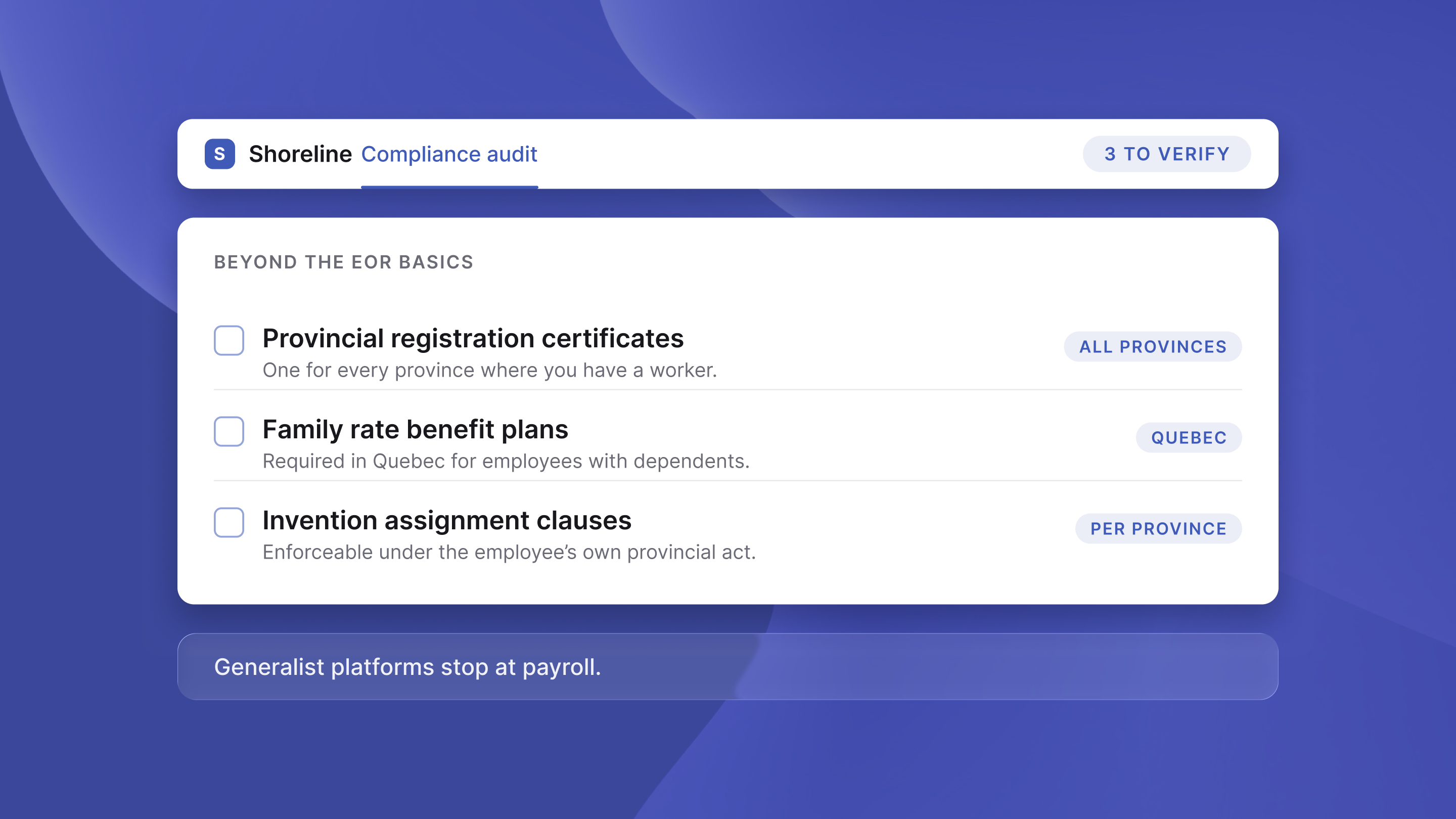
- Request your provider's current provincial registration certificates for every province where you have a worker.
- Review your Quebec benefit plans to ensure all employees with dependents are on Family rate plans.
- Audit your invention assignment clauses to verify they are enforceable under the specific provincial act of the employee's residence.
Compliance is not just a checkbox;it is the foundation of squad stability. Protect your math.
See how Shoreline handles remote developer payroll in Canada, benefits and provincial compliance so you can hire in Canada without a local entity.